AI Search · Analysis
Founder of Words At Scale · 26K-subscriber YouTube channel on AI-assisted SEO
Published June 22, 2026
Google just handed SEOs the first real numbers on how often their pages surface inside AI Overviews and AI Mode. Take the data. Do not flip the switch sitting right next to it.
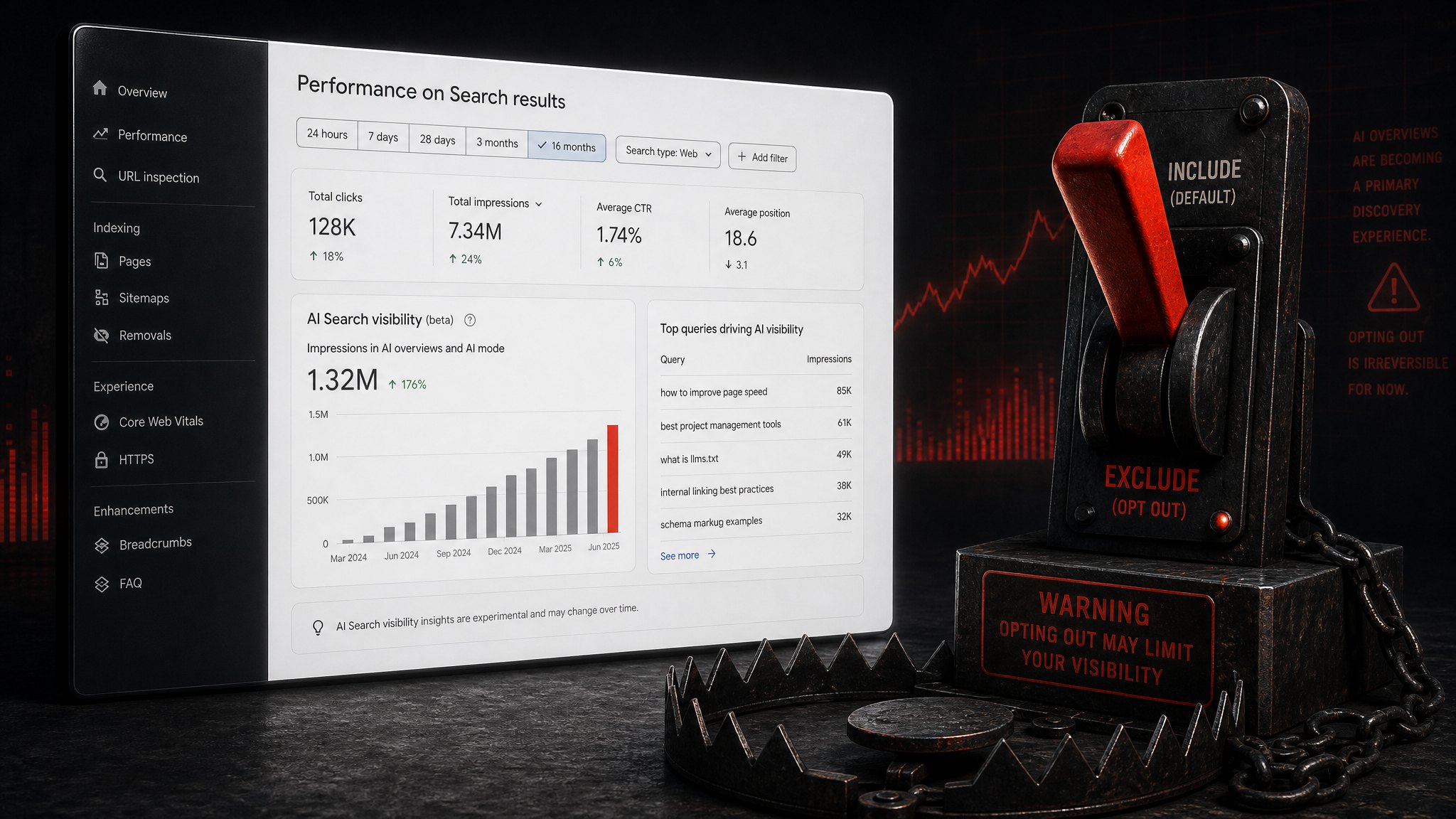
On June 3, Google rolled out Search Generative AI performance reports in Search Console, with dedicated views for Search and Discover. For two years we’ve optimised for AI search essentially blind, guessing whether our pages ever showed up in a generated answer. Now there’s a panel that tells us. That’s a genuine step forward — and Google wrapped it around a trap.
That trap is the opt-out toggle Google shipped alongside the reports. It went live on June 17, and a lot of tired, AI-skeptical site owners are going to flip it on principle. They shouldn’t. Here’s why this matters more than the usual Search Console release note.
First, be honest about what the report actually is. It shows impressions only — broken down by page, country, device and date, with no clicks, CTR or query data. It tells you where you appear in AI answers, not what that appearance earns you. Useful, but read it as a presence signal, not a revenue number. Don’t over-rotate on it.
Second, most of you won’t see it yet. Google is rolling the reports out to a subset of UK-based site owners first before expanding globally, with no firm date. A blank report today isn’t a penalty. It’s a queue.
~92% of AI Overviews cite at least one page that already ranks in the top 10 of classic search results.
Source: Search Engine Roundtable, June 2026
Now the switch. The control lets you opt your site out of AI Overviews, AI Mode and related features entirely — and if you do, you forfeit all impressions and traffic from them. The case for flipping it is real and worth stating plainly: publishers are furious that AI answers digest their work and hand back fewer clicks, and a kill switch finally feels like leverage after years of having none.
But look at the number above before you reach for it. Because roughly nine in ten AI Overviews cite a page already ranking in the top 10, AI visibility is mostly downstream of the rankings you’re already fighting for. Opting out doesn’t claw back the clicks AI took — it just removes you from the surface where attention is migrating, while your competitors stay cited and visible. You’d be punishing Google by punching yourself.
The practical move is unglamorous. Treat AI impressions as your new top-of-funnel signal, cross-check them against your own server logs, and keep doing the thing that feeds both classic and AI results: ranking genuinely strong content and auditing the pages that should be cited but aren’t. The toggle changes none of that work. It only decides whether you get to measure it.
The data is a gift. The toggle is a test. Read the first; ignore the second.

Vlad is the founder of Words At Scale, a YouTube channel and newsletter with 26,000+ subscribers covering AI-assisted SEO and content systems. He builds and ranks content sites and teaches the “rank in 24 hours” SearchGAP Method.