Every great SEO strategy starts with a deep dive into what people are actually searching for. In fact, over 90 percent of online experiences begin with a search engine, making keyword research and understanding user intent the backbone of any successful content plan. When you can pinpoint the exact words and motivations guiding your audience, you set the stage for higher rankings, stronger engagement, and content that feels truly relevant.
Table of Contents
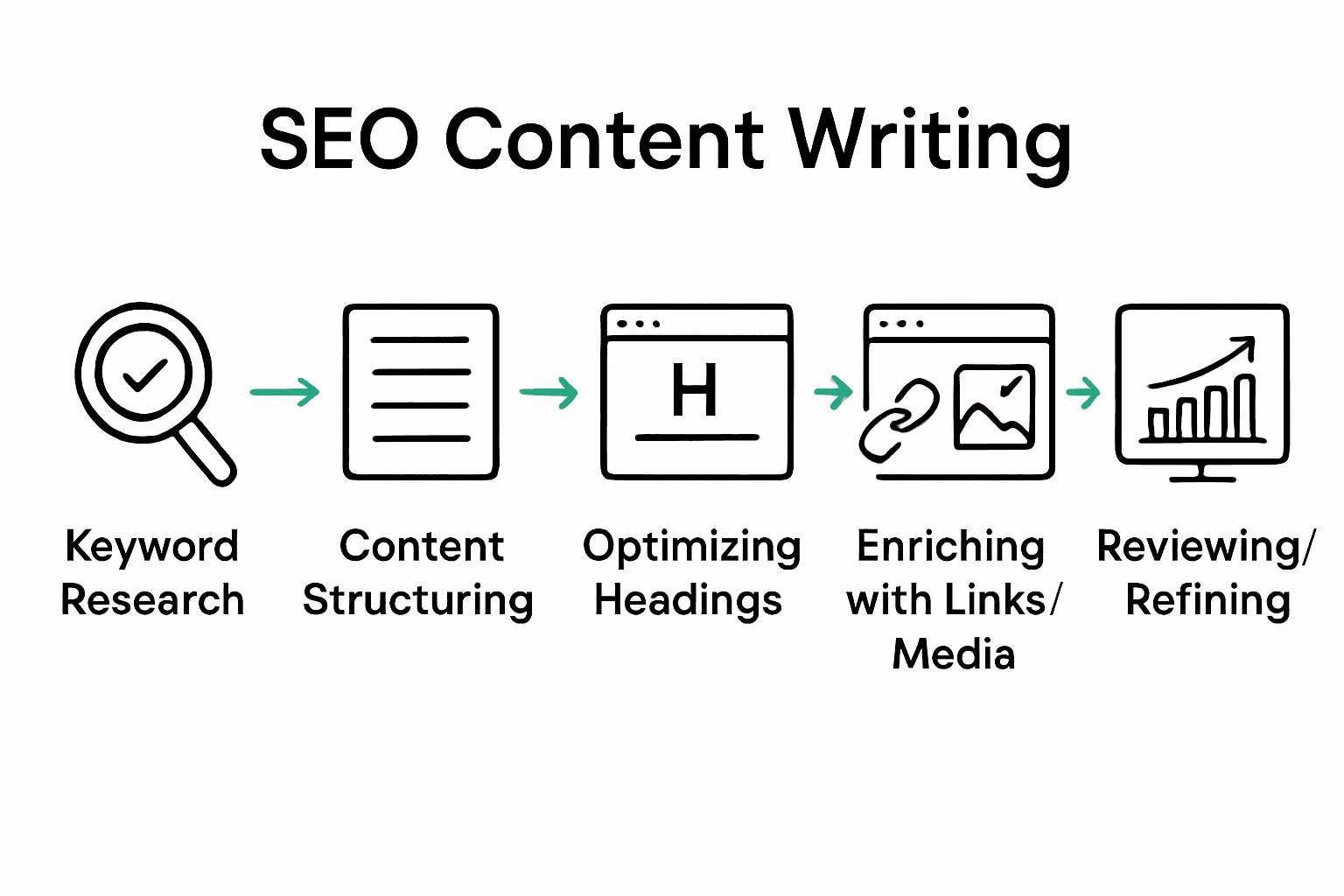
- Step 1: Research Target Keywords And User Intent
- Step 2: Structure Content For Readability And Relevance
- Step 3: Optimize Headings, Meta Tags, And URLs
- Step 4: Enhance Content With Relevant Links And Media
- Step 5: Review Performance And Refine For Better Seo
Quick Summary
| Key Point | Explanation |
|---|---|
| 1. Understand User Intent | Align content with the motivations behind search terms for better relevance and engagement. |
| 2. Structure Content Clearly | Use headings, bullet points, and short paragraphs to enhance readability and maintain interest. |
| 3. Optimize Meta Tags and URLs | Incorporate keywords in headings and create clear, concise meta descriptions for improved search visibility. |
| 4. Use Relevant Links and Media | Add authoritative links and media to enrich content, making it more informative and engaging for readers. |
| 5. Continuously Review Content | Regularly analyze performance metrics to refine content strategy and ensure ongoing SEO effectiveness. |
Step 1: Research Target Keywords and User Intent
Researching target keywords and understanding user intent form the critical foundation of creating SEO friendly content that ranks well in search results. Your goal is to align your content precisely with what users are searching for and the underlying motivations driving their queries.
According to research from arXiv, advanced clustering models using machine learning can help detect nuanced user query intents. This means going beyond simple keyword matching and diving deep into understanding the actual purpose behind a search. Start by brainstorming potential keywords related to your topic using tools like Google Keyword Planner or SEMrush. Look for variations that capture different searcher motivations.
As you research, categorize keywords based on user intent into clear groups:
- Informational intent (seeking knowledge)
- Navigational intent (looking for a specific website)
- Transactional intent (ready to purchase)
- Commercial investigation intent (comparing options before buying)
The key is matching your content type and depth to the specific intent behind each keyword. For instance, an informational keyword requires a comprehensive guide, while a transactional keyword needs a more direct sales oriented approach. arXiv research emphasizes that understanding these intent nuances dramatically improves content relevance and user satisfaction.
Pro tip: Always validate your keyword research by actually searching those terms and analyzing the current top ranking content. What are those pages doing? How can you create something more valuable and targeted?
With your keyword and intent research complete, you are now ready to start drafting content that speaks directly to your audience’s needs and search behaviors.
Step 2: Structure Content for Readability and Relevance
Structuring your content for optimal readability and relevance is a critical step in creating SEO friendly material that keeps readers engaged and search engines impressed. Your goal is to craft a logical flow that guides readers smoothly through your information while maintaining their interest and comprehension.
According to research from kommunikation, web writing requires strategic approaches to enhance user engagement. This means creating scannable content with meaningful headings and logical grouping. Break your content into clear sections with descriptive subheadings that tell readers exactly what to expect. Use short paragraphs (3-4 sentences maximum) and incorporate white space to prevent visual overwhelm.
Key strategies for content structure include:
- Create a clear hierarchical outline with H2 and H3 headings
- Use bullet points and numbered lists to break down complex information
- Ensure each paragraph focuses on a single core idea
- Write compelling topic sentences that capture the essence of each section
arXiv research suggests analyzing digital reading interactions can significantly improve content comprehension. This means thinking about how users actually consume online content. Most readers scan rather than read word for word. Design your content with clear visual cues that allow quick information absorption.
Pro tip: Read your content out loud. If it sounds natural and flows smoothly when spoken, it will likely read well on screen. This technique helps identify awkward phrasing and overly complex sentences.
With your content structured for maximum readability, you are now prepared to refine your writing and make every word count.

Step 3: Optimize Headings, Meta Tags, and URLs
Optimizing your headings, meta tags, and URLs is crucial for improving search engine visibility and user experience. Your objective is to create clear, descriptive, and keyword rich elements that help both search engines and readers understand your content quickly and accurately.
According to research from arXiv, effective heading structures play a critical role in conveying core messages and meeting audience expectations. When crafting headings, focus on creating hierarchical and meaningful titles that include primary keywords naturally. Your H1 should capture the main topic, while H2 and H3 headings break down specific aspects of your content.
Key optimization strategies include:
- Use primary keywords in your main heading (H1)
- Create descriptive and concise meta descriptions under 160 characters
- Build clean URLs that include target keywords
- Ensure URL structures are logical and readable
Wikipedia emphasizes the importance of structured writing that organizes information into clear blocks. This means your meta tags should precisely summarize page content, while URLs should be straightforward and meaningful. Avoid complex strings of numbers or random characters.
Pro tip: Treat your meta description like a mini advertisement. It should entice users to click while accurately representing your page content. Think of it as your content’s elevator pitch.
With your headings, meta tags, and URLs optimized, you have built a strong foundation for search engine visibility and user engagement.
Step 4: Enhance Content with Relevant Links and Media
Enhancing your content with relevant links and media transforms static text into an engaging, informative experience that keeps readers interested and signals quality to search engines. Your goal is to create a rich multimedia environment that supports your written content and provides additional value to your audience.
According to kommunikation, strategic link usage requires clear descriptions and minimal inline formatting to maintain readability. When adding links, ensure they provide genuine value and context. Choose anchor text that accurately describes the destination page rather than generic phrases like click here. External links to authoritative sources boost your content credibility, while internal links help readers navigate related topics on your site.
Key strategies for incorporating links and media include:
- Link to high quality authoritative sources
- Use descriptive anchor text that explains link context
- Include relevant images that illustrate key points
- Add alt text to images for accessibility and SEO
- Embed videos or infographics that provide additional insights
- Ensure media files are optimized for fast loading
Wikipedia highlights how images and diagrams can significantly enhance content clarity and engagement. Think of media as visual punctuation that breaks up text and illustrates complex concepts. An well placed image can explain something in seconds that might take paragraphs to describe.
Pro tip: Always compress images and choose the right file format. Large media files can slow down your page and negatively impact user experience and search rankings.
With your content now enriched by strategic links and compelling media, you have created a more dynamic and informative resource that both readers and search engines will appreciate.
Step 5: Review Performance and Refine for Better SEO
Reviewing and refining your content is an ongoing process that transforms good SEO writing into exceptional search performance. Your goal is to continuously analyze, learn, and adapt your content strategy based on real world data and insights.
According to research from arXiv, advanced clustering models using machine learning can help detect nuanced user query intents. This means going beyond surface level metrics and diving deep into understanding how users actually interact with your content. Use tools like Google Analytics and Google Search Console to track key performance indicators such as organic traffic, bounce rates, average time on page, and click through rates.
Key performance review strategies include:
- Analyze search query reports to understand actual user search terms
- Compare your content performance against top ranking competitors
- Identify pages with high impressions but low click through rates
- Check keyword rankings and look for opportunities to improve
- Review user engagement metrics for content insights
arXiv research emphasizes the critical importance of understanding user intent to enhance content relevance. When reviewing performance, look for patterns in how users find and interact with your content. Are they finding what they need? Are they staying on the page? These insights will guide your refinement strategy.
Pro tip: Treat your content like a living document. SEO is not a one time task but an ongoing process of continuous improvement and adaptation.
With a systematic approach to performance review, you can transform your content into a powerful tool that consistently attracts and engages your target audience.
Discover How to Transform Your SEO Content into Top Rankings
Struggling to write SEO-friendly content that truly connects with your audience and search engines You are not alone Many face challenges like understanding user intent, structuring content for clarity, and optimizing meta elements to boost visibility This article highlights these pain points and offers essential strategies to overcome them Here is your chance to take these insights further and master the art of SEO content creation
Unlock your potential with the free 7-day Advanced Keyword Research Academy at wordsatscale.com This program will help you dive deep into keyword research and user intent, two critical foundations discussed in the article Plus, explore our suite of free SEO and blogging tools designed to improve your content’s structure, linking strategy, and overall search performance Act now to secure your spot and turn every piece of content you create into a powerful traffic magnet Visit wordsatscale.com to start your journey today and bring your SEO content ideas to life with proven tools and expert guidance.
Frequently Asked Questions
How do I identify the right keywords for SEO-friendly content?
To identify the right keywords, start by brainstorming topics related to your content. Use tools to expand on these ideas and categorize them based on user intent—informational, navigational, transactional, or commercial investigation.
What is the best way to structure my SEO-friendly content for readability?
To structure your content effectively, create a clear outline with headings and subheadings that make it scannable. Use short paragraphs and bullet points to present information clearly, helping readers absorb content quickly.
How can I optimize headings and meta tags for better SEO performance?
Optimize headings by including primary keywords and ensuring they accurately reflect the content. Write concise meta descriptions under 160 characters that entice users while summarizing the page effectively.
What types of media should I include in my SEO content?
Include relevant images, videos, or infographics that complement your text and enhance understanding. Ensure all media is optimized for fast loading and includes descriptive alt text for accessibility and better SEO.
How often should I review my content’s SEO performance?
Review your content’s SEO performance regularly, ideally every few months, to track key metrics like organic traffic and bounce rates. Use this data to identify areas for improvement and make necessary refinements to enhance rankings.
What specific actions can I take to improve user engagement with my content?
To improve user engagement, analyze metrics like average time on page and click-through rates. Implement changes based on user behavior insights, adjusting your content style or structure to encourage longer visits and interaction.