Most websites lose out on higher search rankings because of hidden technical problems. A single crawl error or confusing navigation can stop search engines from understanding your content. Over 90 percent of top-ranking pages have clean, organized site structures and fast loading speeds. This guide breaks down practical steps to improve technical SEO, giving your website the foundation it needs for better visibility and stronger search performance.
Table of Contents
- Step 1: Audit Website Structure For Seo Essentials
- Step 2: Fix Crawl Errors And Indexation Issues
- Step 3: Optimize Website Speed And Core Web Vitals
- Step 4: Implement Structured Data For Rich Results
- Step 5: Verify And Monitor Technical Seo Improvements
Quick Summary
| Key Point | Explanation |
|---|---|
| 1. Audit website structure for SEO | Assess your site’s architecture for effective crawling and understanding by search engines. Create a logical hierarchy and use descriptive URLs. |
| 2. Resolve crawl errors and indexation issues | Identify and fix errors that prevent search engines from accessing your content. Use tools to address broken links and ensure proper indexing. |
| 3. Optimize website speed and core web vitals | Improve page load times and performance metrics like LCP and FID. Focus on mobile optimization and eliminate resources that hinder speed. |
| 4. Implement structured data correctly | Use proper schema markup to enhance how search engines display your content. Validate your structured data to ensure accuracy and eligibility for rich results. |
| 5. Monitor and verify technical SEO efforts | Continuously track your website’s performance using analytics tools. Conduct regular audits to identify issues and maintain optimal search performance. |
Step 1: Audit website structure for SEO essentials
Website structure plays a critical role in search engine optimization and determines how effectively search engines can crawl and understand your content. In this step, you will systematically examine your website architecture to identify potential technical barriers preventing optimal search performance.
Begin by using free tools like Google Search Console to generate a comprehensive site map and analyze your current website structure. Focus on creating a logical hierarchy that allows search engines to easily navigate through your pages. Pay special attention to your URL structure ensuring each page has a descriptive and concise URL that includes relevant keywords. For example, instead of “www.yoursite.com/page1” use “www.yoursite.com/technical-seo-guide”.
Your primary goal is to create a clean organized website architecture that enables smooth crawling and indexing. This means reducing unnecessary page depth reducing click paths to fewer than four clicks from the homepage and ensuring a flat site structure where important pages are easily accessible. A well structured website not only helps search engines understand your content but also provides a better user experience which can indirectly boost your search rankings.
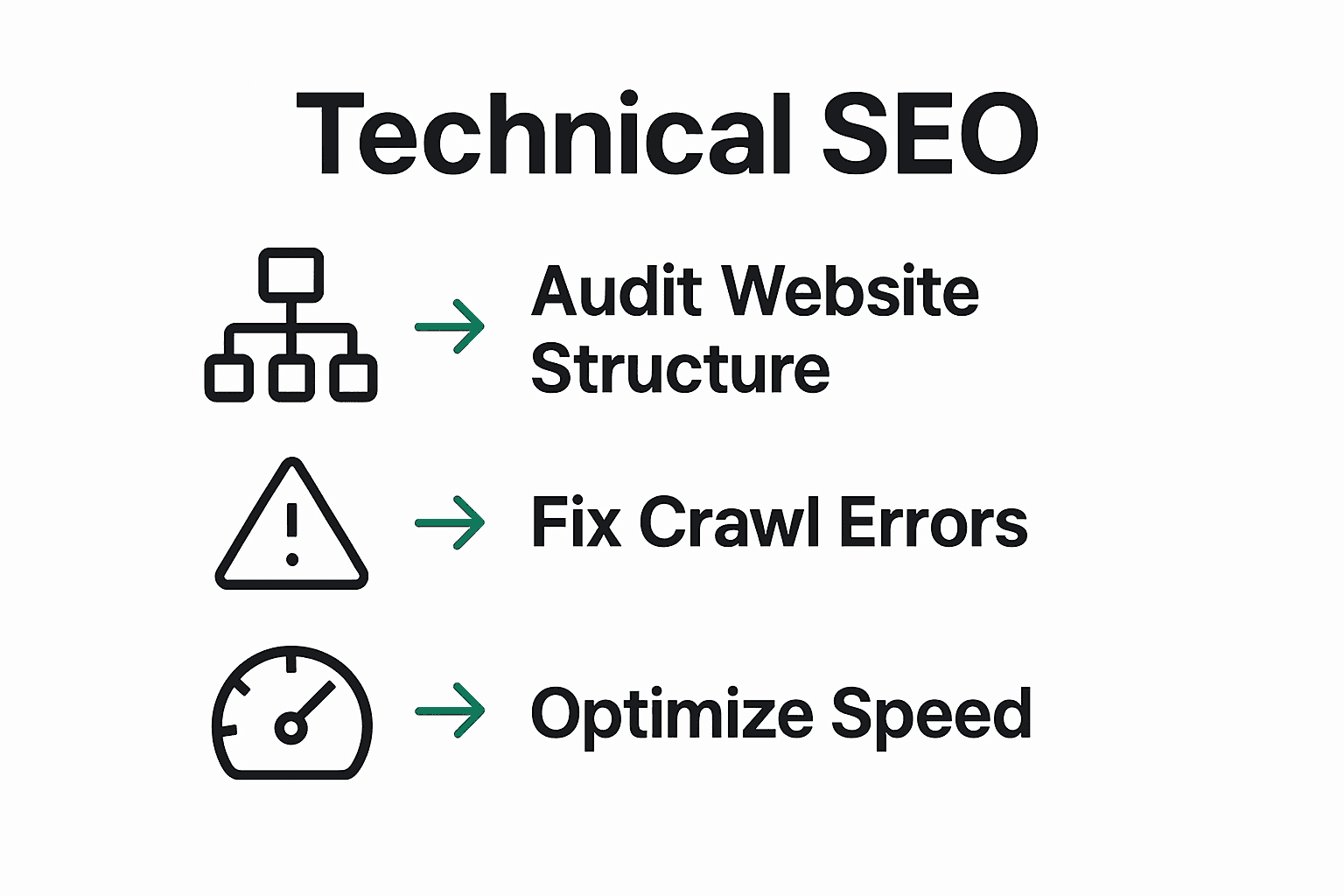
Quick Warning: Avoid creating overly complex navigation systems or deep nested page hierarchies that make it difficult for both users and search engine crawlers to find content quickly.
In the next section we will dive deeper into technical optimization strategies that complement your website structure audit.
Step 2: Fix crawl errors and indexation issues
Crawl errors and indexation problems can severely impact your website’s search engine performance and visibility. In this critical step, you will learn how to diagnose and resolve technical issues that prevent search engines from properly accessing and understanding your website content.
Start by thoroughly examining your Google Search Console reports to identify specific crawl errors such as broken links server connectivity problems or restricted access pages. Look for 404 error codes redirect chains and pages blocked by robots.txt that might prevent search engine bots from discovering your content. Systematically address each error by implementing proper 301 redirects fixing broken internal links and ensuring your robots.txt file is correctly configured to allow search engine crawling.
Pay special attention to your site’s XML sitemap which serves as a roadmap for search engines. Verify that your sitemap is up to date includes all important pages and is submitted directly to Google Search Console. Remove any duplicate or low value pages from your sitemap and ensure that critical pages are indexed. If you notice persistent indexation issues consider using the URL inspection tool in Google Search Console to manually request indexing for important pages that are currently missing from search results.
Quick Warning: Be cautious when modifying robots.txt or implementing redirects. One misconfiguration can accidentally block entire sections of your website from search engine crawling.

In the next section we will explore advanced technical SEO strategies to further optimize your website’s search engine performance.
Step 3: Optimize website speed and core web vitals
Website speed and core web vitals are crucial ranking factors that directly impact user experience and search engine performance. In this step, you will learn how to systematically improve your website’s loading speed and meet Google’s critical performance metrics.
Begin by running a comprehensive performance analysis using tools like Google PageSpeed Insights and advanced SEO techniques for higher rankings. Focus on key performance metrics such as Largest Contentful Paint (LCP) First Input Delay (FID) and Cumulative Layout Shift (CLS). Optimize image sizes implement browser caching minimize server response times and leverage content delivery networks (CDNs) to reduce loading times. Compress and properly format images use next generation image formats like WebP and eliminate render blocking resources that slow down your website.
Prioritize mobile performance as Google uses mobile first indexing. Ensure your website loads quickly on mobile devices by reducing unnecessary JavaScript minimizing CSS and implementing responsive design techniques. Use tools like Chrome DevTools to identify and eliminate performance bottlenecks. Pay special attention to above the fold content loading which significantly impacts user perception of website speed. Implement lazy loading for images and videos to improve initial page load times and overall user experience.
Quick Warning: Aggressive optimization can sometimes break website functionality so always test changes thoroughly and monitor performance metrics carefully.
In the next section we will explore advanced technical SEO strategies to further enhance your website’s search engine performance.
Step 4: Implement structured data for rich results
Structured data transforms how search engines understand and display your website content, potentially unlocking powerful visual enhancements in search results. According to Elysium Academy, implementing structured data helps search engines comprehend content more precisely, leading to enhanced search result features like rich snippets.
Start by selecting appropriate schema markup types relevant to your content such as Article Organization Product or Event schemas. Use Google’s Structured Data Markup Helper to generate correct JSON LD code and implement it directly into your webpage’s HTML head section. As Anicca discusses structured data provides explicit clues about page content meaning which can dramatically improve search result visibility. Validate your implementation using Google Rich Results Test to ensure proper parsing and potential rich result eligibility.
Pay special attention to key structured data elements including precise business information product details review ratings and relevant metadata. Consistently update your structured data to reflect current content and maintain accuracy. Integrate schema markup across different content types to maximize your chances of appearing in rich search results such as featured snippets knowledge panels and enhanced organic listings.
Quick Warning: Incorrect implementation of structured data can lead to manual penalties from search engines so always follow official guidelines and test thoroughly.
In the next section we will explore advanced technical strategies to further optimize your website’s search performance.
Step 5: Verify and monitor technical SEO improvements
Continuous verification and monitoring are essential for maintaining and improving your website’s technical SEO performance. As Negina emphasizes regular SEO audits are crucial for ensuring optimal website performance and adherence to best practices.
Establish a comprehensive monitoring strategy using tools like Google Search Console SEO audit guide to track key performance indicators. Set up automated alerts for critical issues such as crawl errors sudden ranking drops or significant changes in organic traffic. Create a monthly reporting schedule where you systematically review technical metrics including indexing status mobile usability page speed and core web vitals. Compare current performance against baseline measurements to identify trends improvements or potential regression areas.
Develop a proactive approach to technical SEO maintenance by creating a documented workflow for addressing discovered issues. Prioritize problems based on their potential impact on search rankings and user experience. Implement a continuous improvement cycle where you regularly test optimize and validate technical SEO elements. Track your website performance across multiple search engines and devices ensuring consistent optimization across different platforms and user experiences.
Quick Warning: Avoid making multiple significant technical changes simultaneously as this can make it difficult to isolate the specific impact of individual optimizations.
In the conclusion we will summarize the key technical SEO strategies to help you achieve sustainable search engine success.
Accelerate Your Technical SEO Success with Proven Tools and Training
Struggling with complex crawl errors or slow website speed that holds back your search rankings It is time to take control and apply the full potential of your technical SEO knowledge. This article outlined critical steps like auditing your website structure fixing indexation issues and implementing structured data but executing these strategies can feel overwhelming without the right guidance and resources. If you want to see real growth fast and avoid costly SEO mistakes you need a trusted partner to empower your efforts.

Join the exclusive community at wordsatscale.com where marketers and site owners like you master advanced SEO techniques through expert-led training and access powerful SEO tools designed for real results. Start with our free 7-day advanced keyword research academy to sharpen your skills and grab the resources that simplify tackling tough SEO challenges. Don’t let technical hurdles delay your success take the next step today and watch your rankings soar with confidence. Explore all we offer at wordsatscale.com and unlock your website’s full potential now.
Frequently Asked Questions
How can I audit my website structure for SEO?
Begin by using tools like Google Search Console to generate a site map and analyze your current website structure. Focus on creating a logical hierarchy and ensure URLs are concise and keyword-rich, such as changing “www.yoursite.com/page1” to “www.yoursite.com/technical-seo-guide”.
What are crawl errors and how do I fix them?
Crawl errors occur when search engines struggle to access your website content. Identify these issues by reviewing your Google Search Console reports and implement fixes like 301 redirects for broken links or updating your robots.txt to allow proper crawling.
How can I improve my website speed and core web vitals?
To enhance website speed, analyze your site’s performance using speed testing tools. Focus on optimizing key metrics like Largest Contentful Paint (LCP) and minimize page load times by optimizing images and reducing unnecessary code, aiming for improvements within 30 days.
What is structured data, and how do I implement it?
Structured data helps search engines understand your content better, which can enhance your visibility in search results. Select appropriate schema types for your content, generate the necessary JSON-LD code, and implement it in your HTML, ensuring validation with testing tools.
How do I monitor my technical SEO improvements?
Establish a monitoring routine using metrics from your SEO audit tools to regularly track performance indicators like indexing status and mobile usability. Set up automated alerts for issues and create monthly reports to evaluate trends and make necessary adjustments to maintain optimal performance.
What should I avoid when implementing technical SEO changes?
Avoid making multiple significant changes at once, as this can complicate troubleshooting if issues arise. Instead, implement adjustments gradually, allowing for individual analysis of their effects on search rankings and user experience.