
Most American businesses quickly learn that standing out in search results is tougher than it looks. With online competition growing rapidly and over 60 percent of clicks going to just the top three results, knowing exactly who your real rivals are has never mattered more. This guide shows how to cut through the noise and pinpoint the SEO competitors that could make or break your search visibility.
Table of Contents
- Step 1: Identify Key SEO Competitors In Your Niche
- Step 2: Gather Essential Competitor SEO Data And Metrics
- Step 3: Analyze Competitors’ Keyword And Content Strategies
- Step 4: Assess Backlink Profiles And Authority Signals
- Step 5: Uncover Gaps And Develop Winning Strategies
- Step 6: Track Results And Refine Your SEO Approach
Quick Summary
| Key Point | Explanation |
|---|---|
| 1. Identify Your SEO Competitors | Use search tools and manual techniques to discover sites competing for your target keywords. |
| 2. Gather Key SEO Data | Collect data such as keyword rankings and backlink profiles to understand competitors’ strategies. |
| 3. Analyze Content Strategies | Study competitors’ keyword targeting, content types, and depth to identify differentiation opportunities. |
| 4. Assess Backlink Profiles | Examine competitors’ backlink quality and authority to find potential link-building strategies for your site. |
| 5. Track and Refine Your Strategy | Continuously monitor performance metrics and adapt strategies based on data insights for sustained SEO improvement. |
Step 1: Identify Key SEO Competitors in Your Niche
Successfully pinpointing your SEO rivals requires strategic research and precision. By understanding who competes for your target keywords, you can develop a robust strategy to outrank them in search results.
Start by using specialized search tools and manual search techniques to map out your competitive landscape. Look beyond obvious industry players and identify low competition keywords that reveal potential competitors targeting similar audience segments. Use Google search results as your initial reconnaissance ground search for websites ranking for your primary keywords. Pay attention to domains consistently appearing in top search positions across multiple related searches.
Your competitor identification process should focus on websites that meet three critical criteria: domain relevance, keyword overlap, and search ranking proximity. Analyze their content strategies, backlink profiles, and overall search engine performance. Tools like SEMrush, Ahrefs, and Moz can provide detailed insights into competitor keyword rankings and content gaps. Pro tip: Track at least five to seven competitors to get a comprehensive view of your niche’s competitive environment.
Once you have your initial competitor list, prepare to dive deeper into their specific SEO strategies in the upcoming analysis stages. This foundational research sets the stage for developing a targeted approach that can help you climb search rankings effectively.
Step 2: Gather Essential Competitor SEO Data and Metrics
Competitive SEO analysis demands a systematic approach to collecting and interpreting critical performance data. By understanding the precise metrics that reveal your competitors’ search engine strategies, you can develop a targeted plan to outperform them.
Begin by leveraging comprehensive SEO tools that provide detailed competitive insights. Advanced keyword analysis tools can help you extract valuable information about your competitors’ ranking strategies. Focus on key metrics that offer meaningful competitive intelligence: organic search visibility, keyword rankings, domain authority, backlink profiles, and content performance. Examine each competitor’s top-performing pages, analyze their keyword targeting strategies, and identify the content types generating the most search traffic.

Your data gathering process should include quantitative and qualitative assessment metrics. Calculate metrics like domain rating, referring domains, total backlinks, and organic traffic estimates. Pay special attention to content gaps and keyword opportunities where competitors might have overlooked potential ranking strategies. Pro tip: Use multiple SEO tools to cross-reference data and ensure accuracy, as each platform might offer slightly different insights.
With your comprehensive competitor data collected, you’ll be ready to move into the next phase of strategic analysis. This foundational research provides the intelligence needed to craft a nuanced SEO approach that can systematically improve your search engine performance.
Step 3: Analyze Competitors’ Keyword and Content Strategies
Understanding your competitors’ keyword and content strategies is crucial for developing a winning SEO approach. This analysis will help you identify opportunities to differentiate your content and capture valuable search engine real estate.
Start by conducting a comprehensive keyword analysis using essential types of keyword research techniques. Map out the primary and long-tail keywords your competitors are targeting, paying close attention to their content themes, search intent, and ranking performance. Examine the content formats they use most successfully such as blog posts, videos, infographics, or comprehensive guides. Look for patterns in their keyword targeting: Do they focus on informational, transactional, or navigational keywords? Analyze the depth and quality of their content, noting the average word count, use of multimedia, and structural elements that contribute to their search rankings.
Your strategic analysis should go beyond surface-level observations. Dive deep into the semantic relationships between keywords, identifying content gaps and unexplored topic clusters that your competitors might have missed. Pay attention to the search volume, keyword difficulty, and potential traffic for each identified keyword. Pro tip: Create a spreadsheet to track your findings, including metrics like search volume, current ranking positions, content type, and potential optimization strategies for each competitive keyword.
With this detailed competitive keyword and content analysis complete, you are now equipped to develop a more targeted and effective content strategy. The insights you have gathered will serve as a strategic roadmap for creating content that not only matches but potentially outperforms your competitors in search results.
Step 4: Assess Backlink Profiles and Authority Signals
Backlink analysis represents a critical component of competitive SEO strategy, providing deep insights into your rivals’ domain authority and link building effectiveness. Understanding how to systematically evaluate these authority signals can dramatically improve your search engine positioning.
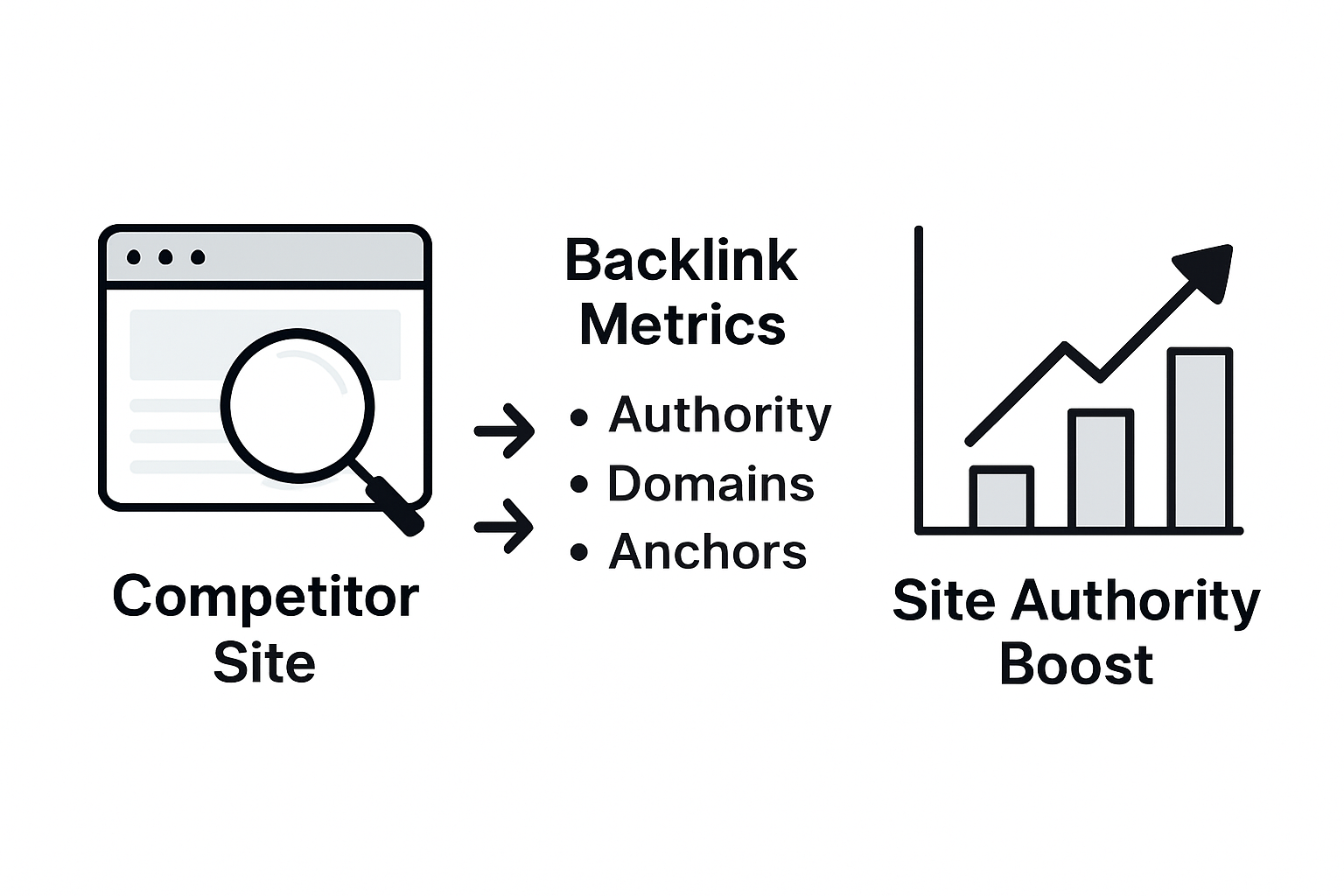
Begin by utilizing comprehensive SEO tools to conduct an in-depth examination of your competitors’ backlink landscapes. Advanced SEO techniques can help you uncover the nuanced strategies behind high performing backlink profiles. Focus on analyzing key metrics such as domain authority, total referring domains, anchor text distribution, and link quality. Evaluate the diversity of backlink sources, identifying whether competitors are acquiring links from authoritative industry websites, academic institutions, government domains, or niche relevant platforms.
Your backlink assessment should involve a multifaceted approach that goes beyond raw numerical data. Examine the contextual relevance of each backlink, understanding how and why certain links contribute to domain strength. Pay special attention to the following critical factors: link placement within content, the topical relevance of linking domains, and the overall trust and citation flow of backlinks. Pro tip: Create a comparative spreadsheet that tracks domain authority, total backlinks, and link quality scores across your top competitors to identify potential link building opportunities.
With a comprehensive understanding of your competitors’ backlink strategies, you now have actionable intelligence to develop a more sophisticated link acquisition approach. The insights gathered will help you strategically target high value link opportunities and incrementally improve your website’s search engine authority.
Step 5: Uncover Gaps and Develop Winning Strategies
Transforming competitive insights into actionable SEO strategies requires a systematic approach to identifying and exploiting market opportunities. By carefully analyzing the gaps in your competitors’ content and keyword strategies, you can create a targeted plan for search engine dominance.
Genspark AI keyword research techniques can help you discover unexplored content opportunities that your competitors have overlooked. Start by cross referencing your previous keyword and backlink analysis to identify topics with high search potential but low competitive saturation. Look for content gaps where competitors are not fully addressing user intent or providing comprehensive information. Examine the depth of existing content in your niche and identify areas where you can create more valuable, in depth resources that provide superior user experience.
Your strategy development should focus on creating content that not only fills existing gaps but also provides unique perspectives and additional value. Analyze the structural weaknesses in competitors content such as outdated information, superficial explanations, or lack of multimedia elements. Develop a content roadmap that prioritizes topics with the highest potential for ranking improvement and audience engagement. Pro tip: Create a scoring system that evaluates potential content opportunities based on search volume, keyword difficulty, current content quality, and your unique value proposition.
With a clear understanding of your competitive landscape and strategic content opportunities, you are now prepared to execute a targeted SEO improvement plan. The gaps you have uncovered will serve as a strategic blueprint for creating content that can potentially outperform your competitors and capture valuable search engine real estate.
Step 6: Track Results and Refine Your SEO Approach
Continuous monitoring and strategic refinement are essential for maintaining a competitive edge in search engine rankings. This final step transforms your competitive analysis into an ongoing optimization process that adapts to the dynamic digital landscape.
Implement a comprehensive tracking system that monitors key performance metrics across multiple dimensions. Competitor analysis techniques emphasize the importance of consistent performance evaluation and adaptive strategies. Set up tracking for organic search rankings, keyword positions, traffic volume, and conversion rates. Utilize tools like Google Analytics, SEMrush, and Ahrefs to create customized dashboards that provide real time insights into your SEO performance relative to your competitors. Establish baseline metrics from your initial competitive research and create quarterly benchmarks to measure progress and identify areas requiring strategic adjustment.
Your refinement process should be data driven and responsive to emerging trends. Regularly audit your content performance, analyzing which strategies are generating the most significant improvements in search rankings. Pay attention to changes in search algorithms, shifts in user intent, and emerging content formats that could impact your SEO effectiveness. Pro tip: Create a quarterly review process that systematically evaluates your SEO strategies, compares performance against competitors, and develops targeted improvements based on actionable insights.
With a robust tracking and refinement system in place, you have transformed competitive analysis from a one time task into a continuous improvement cycle. Your ability to adapt and evolve will be the key to maintaining and expanding your search engine visibility.
Take Control of Your SEO Success with Proven Tools and Strategies
If you are tackling the challenge of outranking competitors by mastering keyword research, backlink analysis, and content gaps then you need reliable support that goes beyond basic advice. This guide highlights critical pain points such as identifying relevant SEO competitors, uncovering content opportunities, and tracking results consistently for growth. Don’t let your efforts stall because you lack the right resources or step-by-step guidance.

Dive into our comprehensive Tools – WordsAtScale to access free and advanced SEO utilities designed to make your competitor analysis more effective. Complement your strategy by learning expert Copywriting – WordsAtScale techniques that help craft the unique content necessary to fill those competitive gaps. Ready to boost your organic traffic and rank faster? Visit WordsAtScale now and claim your spot in the free 7-day keyword research academy. Start transforming your SEO approach today before your rivals take the lead.
Frequently Asked Questions
How can I identify my key SEO competitors?
To identify your key SEO competitors, start by using keyword research tools and conducting manual searches for your target keywords. Look for websites that consistently rank for these keywords, and analyze their content and backlink profiles to understand their SEO strategies.
What essential metrics should I collect for competitor SEO analysis?
Focus on collecting metrics such as organic search visibility, keyword rankings, domain authority, and total backlinks. Gather both quantitative and qualitative data to effectively assess how your competitors perform in search engine results.
How can I analyze competitors’ keyword strategies effectively?
Conduct a detailed keyword analysis by mapping out both primary and long-tail keywords your competitors target. Pay attention to content themes and formats, while noting the depth and quality of their content to uncover opportunities for your own strategy.
What should I look for in competitors’ backlink profiles?
Evaluate key aspects such as domain authority, referring domains, and link placement when analyzing competitors’ backlink profiles. Identify the types of sites linking to them and examine the contextual relevance of these backlinks to enhance your own link-building efforts.
How do I uncover content gaps in my competitors’ strategies?
Perform a content gap analysis by cross-referencing your own keyword research with competitors’ offerings. Identify topics where competitors do not fully address user needs, allowing you to create high-value content that fills those gaps.
How can I track my SEO performance against competitors?
Establish a tracking system to monitor metrics like organic rankings, traffic volume, and conversion rates regularly. Set quarterly benchmarks to assess progress and make necessary adjustments to keep ahead in the competitive landscape.
Recommended
- Best Keyword Research Tools for Fast Rankings (Tested & Compared) – WordsAtScale
- 7 Essential Examples of SEO Tactics for Website Growth – WordsAtScale
- Best Keyword Research Tools – Expert Comparison 2025 – WordsAtScale
- Top 7 on-page seo tools – Expert Comparison 2025 – WordsAtScale
- Ecommerce Growth Strategies: Elevate Your Online Sales – ORNER