
Over 60 percent of American businesses say their SEO results depend directly on keyword research tools. If you want your website to stand out in search results, building a smart keyword strategy is essential. Choosing the right tools and techniques gives you an edge over your competitors and helps you focus on what really brings results. This guide breaks down each step so you can move from initial research to ongoing performance tracking with confidence.
Table of Contents
- Step 1: Set Up Reliable Keyword Research Tools
- Step 2: Collect and Organize Broad Keyword Data
- Step 3: Evaluate Competitor Keyword Strategies
- Step 4: Prioritize High-Value Keyword Opportunities
- Step 5: Validate Results with Performance Tracking
Quick Summary
| Key Insight | Explanation |
|---|---|
| 1. Invest in Reliable Tools | Use robust keyword research tools for comprehensive data analysis and effective SEO strategy development. |
| 2. Organize Keywords Systematically | Systematically categorize keywords by relevancy and intent to facilitate targeted content strategy. |
| 3. Analyze Competitor Strategies | Study competitors to identify valuable keywords they miss and evaluate their content effectiveness. |
| 4. Focus on High-Value Keywords | Prioritize keywords not merely by search volume but also by their alignment with business goals and user intent. |
| 5. Continuous Performance Tracking | Regularly analyze keyword performance, adapting strategies based on evolving search behaviors and market dynamics. |
Step 1: Set Up Reliable Keyword Research Tools
Setting up reliable keyword research tools is a strategic process that will transform how you approach search engine optimization. The right tools help you uncover valuable search insights and guide your content strategy with precision.
Start by exploring professional keyword research tools that offer comprehensive data analysis capabilities. Modern web scraping applications can automate the keyword extraction process, allowing you to efficiently harvest relevant search terms. Researchers have developed sophisticated techniques for automating literature searches that can be adapted to SEO keyword strategies.
When selecting your keyword research toolkit, prioritize tools with robust filtering options that allow you to segment keywords by search volume, competition level, and user intent. Look for platforms that provide real time data updates and comprehensive metric breakdowns. Some advanced tools even offer predictive analytics that help you anticipate emerging search trends before they become mainstream.
Warning: Not all keyword research tools are created equal. Free versions often provide limited insights, so consider investing in premium solutions that deliver granular data and competitive intelligence. Your keyword strategy is only as strong as the tools you use to build it.
Step 2: Collect and Organize Broad Keyword Data
Collecting and organizing broad keyword data forms the foundation of an effective search engine optimization strategy. This critical step helps you map out the comprehensive landscape of potential search terms that can drive organic traffic to your website.
Begin by leveraging comprehensive keyword research strategies that expand beyond simple direct matches. Research techniques recommend incorporating synonyms and related terms to broaden your search potential. Professional researchers suggest developing a systematic approach that includes multiple variations of potential search terms ranging from broad conceptual keywords to specific long tail phrases.
Organize your keyword collection using a structured spreadsheet or specialized keyword management tool. Group keywords by semantic relevance, search intent, and potential value. Categorize them into clusters like informational, navigational, and transactional keywords. This systematic organization allows you to understand the nuanced connections between different search terms and develop more targeted content strategies.

Pro Tip: When collecting keywords, prioritize terms with meaningful search volume and reasonable competition levels. Not every keyword is worth pursuing and quality always trumps quantity in strategic keyword research. Your goal is to build a targeted keyword portfolio that aligns precisely with your content goals and audience needs.
Step 3: Evaluate Competitor Keyword Strategies
Evaluating competitor keyword strategies is a sophisticated process that reveals critical insights into your industry search landscape. This step helps you understand how top performers in your niche are capturing organic search traffic and identifying potential opportunities for your own content.
Begin by finding low competition keywords that your competitors might have overlooked. Advanced terminology harvesting techniques allow you to uncover nuanced search terms that go beyond direct keyword matching. Professional researchers recommend using specialized tools that can generate relevant search terms by analyzing semantic connections and contextual relationships between keywords.
Utilize competitive analysis tools to map out your competitors keyword portfolios. Compare their top performing keywords, examine the search intent behind their content, and identify gaps in their strategies. Some advanced research applications can generate comprehensive keyword lists without relying on exact match techniques, providing you with a more dynamic approach to keyword research.
Warning: Not all competitor keywords are worth targeting. Prioritize keywords that align closely with your content goals, have reasonable search volume, and demonstrate clear user intent. Your strategy should focus on quality and relevance rather than blindly copying competitor approaches.
Step 4: Prioritize High-Value Keyword Opportunities
Prioritizing high-value keyword opportunities is a strategic approach that transforms your SEO efforts from scattered attempts to precision targeted content marketing. This crucial step helps you focus your resources on keywords that will deliver maximum organic search impact and drive meaningful traffic to your website.
Effective keyword search strategies require careful analysis of multiple performance metrics beyond simple search volume. Research approaches recommend evaluating keywords through a multidimensional lens that considers search intent, competition level, and potential conversion value. Professional marketers develop sophisticated scoring systems that assign weighted values to keywords based on their potential to drive qualified traffic and align with specific business objectives.
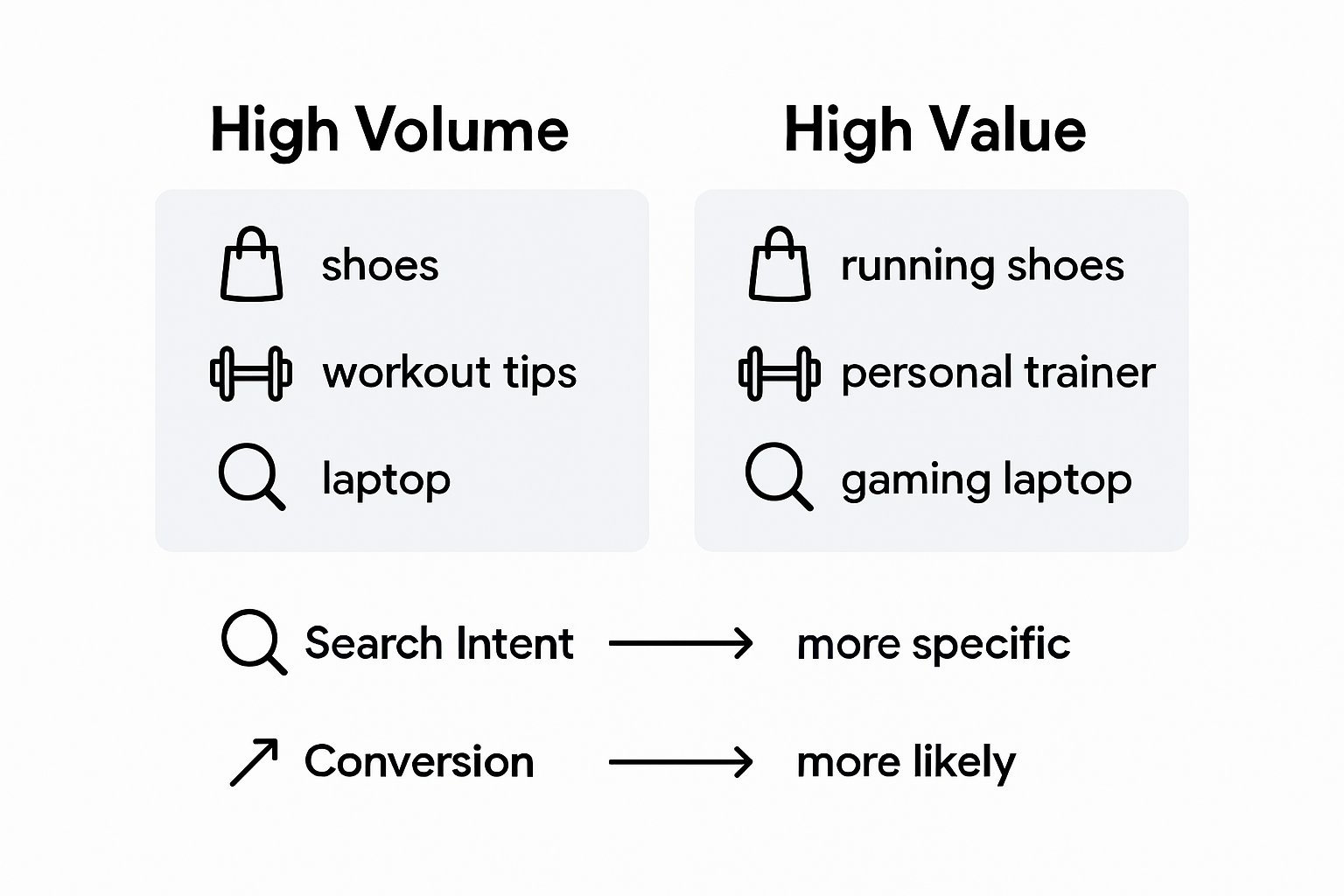
Understand the difference between high volume and high value keywords by analyzing buyer intent keywords that demonstrate clear commercial potential. Look for search terms that indicate users are closer to making a purchase decision rather than just browsing. Implement a scoring matrix that considers factors like commercial intent, search difficulty, current ranking potential, and alignment with your content strategy.
Warning: Avoid the common mistake of chasing keywords with massive search volumes but little relevance to your specific business goals. Your keyword strategy should be a precision instrument that attracts the right audience at the right stage of their customer journey.
Step 5: Validate Results with Performance Tracking
Validating keyword strategy performance is the critical final stage that transforms your research from theoretical analysis into actionable insights. This step helps you understand the real world impact of your keyword selections and make data driven refinements to your SEO approach.
Web scraping applications now offer sophisticated tracking mechanisms that go beyond traditional analytics. Keyword harvesting processes recommend implementing comprehensive monitoring systems that track multiple performance indicators including organic search rankings, click through rates, content engagement metrics, and conversion potential. Professional marketers create dynamic dashboards that provide real time feedback on keyword effectiveness.
Establish a robust tracking framework by connecting your keyword strategy with specific performance goals. Monitor key metrics like search engine ranking positions, organic traffic volume, time on page, and conversion rates for pages targeting specific keyword clusters. Use advanced analytics tools that can provide granular insights into how individual keywords contribute to your overall content marketing objectives.
Warning: Performance tracking is not a one time activity. Successful SEO requires continuous monitoring and adaptive strategies. Your keyword performance can shift rapidly based on algorithm changes, competitive landscape, and evolving user search behaviors. Regular review and strategic adjustments are essential to maintaining and improving your search engine visibility.
Unlock Your Potential with Advanced Keyword Tools and Training
Mastering an advanced keyword analysis process to boost your search rankings can feel overwhelming without the right support. If you want to overcome challenges like identifying high-value keywords, evaluating competitors, and validating your results efficiently you need tools and strategies designed to simplify these complex steps. The key is to harness proven keyword research techniques paired with powerful resources that guide you through every phase of your SEO journey.
Discover how our curated Tools – WordsAtScale empower marketers and website owners to uncover hidden keyword opportunities and track performance with precision.

Ready to transform your keyword strategy with actionable insights and expert guidance? Join the free 7-day advanced keyword research academy on WordsAtScale and gain exclusive access to resources that take you from broad keyword discovery to focused optimization. Dive deeper into smart SEO tactics on our Copywriting – WordsAtScale page and start ranking higher today.
Frequently Asked Questions
How can I set up reliable keyword research tools?
To set up reliable keyword research tools, explore professional applications that provide comprehensive data analysis. Begin by selecting tools with robust filters for search volume, competition, and user intent, and organize your spreadsheet for effective tracking.
What are the best practices for collecting and organizing broad keyword data?
The best practices for collecting and organizing broad keyword data involve leveraging multiple variations of potential search terms and grouping them by relevance and intent. Create a structured spreadsheet to categorize keywords into informational, navigational, and transactional clusters for effective targeting.
How do I evaluate competitor keyword strategies that can enhance my own?
To evaluate competitor keyword strategies, identify low competition keywords that your competitors may have missed and analyze their keyword portfolios. Use competitive analysis to compare their top performing keywords and recognize gaps where you can create valuable content.
What criteria should I use to prioritize high-value keyword opportunities?
Prioritize high-value keyword opportunities by evaluating them through search intent, competition level, and potential conversion value. Focus on using a scoring matrix to determine keywords that align closely with your content goals and demonstrate clear commercial intent.
How can I validate the effectiveness of my keyword strategy?
To validate the effectiveness of your keyword strategy, establish a comprehensive performance tracking framework that includes metrics like organic search rankings and conversion rates. Regularly monitor these key indicators to make data-driven adjustments and enhance your SEO efforts.