Most businesses waste energy targeting the wrong people online. When you truly understand your audience, every part of your SEO strategy changes for the better. Studies show that user-focused keyword research can increase web traffic quality by over 60 percent. Knowing exactly who you want to reach—what questions they have, what language they use—takes the guesswork out of content creation and gives you a clear advantage. This guide shows you simple ways to connect with your ideal readers and find the keywords that matter most.
Table of Contents
- 1. Understand Your Audience Needs
- 2. Find High-Value Search Opportunities
- 3. Boost Search Engine Rankings Easily
- 4. Drive Consistent and Targeted Traffic
- 5. Improve Content Planning and Structure
- 6. Outperform Competitors Strategically
- 7. Maximize ROI on Marketing Efforts
Quick Summary
| Takeaway | Explanation |
|---|---|
| 1. Understand your audience’s needs. | Knowing your audience’s challenges and language enhances keyword research effectiveness and content relevance. |
| 2. Identify high-value search opportunities. | Focus on keywords with high demand and low competition to maximize search visibility and engagement. |
| 3. Boost search rankings through quality content. | Create authoritative content that addresses user intent and optimizes for semantically related keywords to improve rankings. |
| 4. Drive targeted traffic effectively. | Implement strategic keyword targeting and structured content to attract and engage the right audience consistently. |
| 5. Maximize your marketing ROI. | Use keyword research to align content with user intent, reducing wasted spend and enhancing marketing efficiency. |
1. Understand Your Audience Needs
Keyword research starts with knowing exactly who you want to reach online. Audience understanding transforms your entire SEO strategy from guesswork to precision targeting. Think of it like creating a map where your ideal readers are the destination.
When you deeply comprehend what your audience searches for and why they search, you unlock powerful content creation insights. Your keyword research becomes a direct line of communication with potential readers or customers. This means understanding their pain points, questions, curiosities and language patterns.
To effectively map audience needs, start by creating detailed audience personas. Ask yourself critical questions:
- What problems are they trying to solve?
- What information are they seeking?
- What language do they naturally use?
- What search queries might they type?
Practical implementation involves using tools like Google Analytics and social media insights to gather real behavioral data. Pay attention to comments sections, forum discussions, and customer feedback to understand the actual words people use when discussing topics in your niche.
The magic happens when you align your keyword strategy with genuine audience intent. Instead of chasing generic terms, you’ll discover specific phrases that connect directly with what your audience truly wants to know. This approach transforms keyword research from a technical exercise into a powerful audience connection strategy.
2. Find High-Value Search Opportunities
Not all keywords are created equal. High-value search opportunities represent the sweet spot where audience demand meets minimal competition a hidden goldmine for digital marketers and content creators.
Research from arXiv suggests a sophisticated computational framework for identifying strategic keyword opportunities that can dramatically transform your search visibility. By developing a multi level approach to keyword optimization, you can precisely target search terms that deliver maximum impact.
To uncover these golden keywords, you need a strategic methodology:
- Analyze search volume and competition levels
- Examine user intent behind search queries
- Identify long tail keywords with specific audience needs
- Look for keywords with commercial potential
Interestingly, another research study introduces an innovative approach to finding influential search communities. This means going beyond basic keyword metrics and understanding the broader ecosystem of search behavior.
Practically speaking, use tools like Google Keyword Planner and SEMrush to map out potential keyword opportunities. Focus not just on high volume terms but on phrases that demonstrate clear user intent and lower competitive density. The goal is discovering keywords that represent genuine opportunities for ranking and engagement.
Your guide on types of keyword research can provide additional insights into developing a comprehensive keyword strategy that helps you consistently uncover high value search opportunities.
3. Boost Search Engine Rankings Easily
Search engine rankings are the digital scorecard that determines your online visibility. Getting to the top isn’t about luck it’s about strategic implementation and understanding how search algorithms work.
According to Wikipedia’s Hilltop algorithm research, search engines identify authoritative pages through sophisticated mechanisms that evaluate content relevance and credibility. This means your ranking strategy must focus on creating high quality content that demonstrates expertise.
Keyword clustering offers a powerful approach to improving your search rankings. As research indicates, segmenting target search terms into strategic groups can significantly enhance your page’s search performance.
To boost your rankings effectively, implement these key strategies:
- Create comprehensive content that thoroughly addresses user questions
- Use semantically related keywords naturally throughout your text
- Build quality backlinks from reputable websites
- Optimize page loading speed and mobile responsiveness
- Ensure your content matches precise user search intent
Professional SEO requires consistent effort. Think of your content as a living entity that needs regular updates and refinement. Google rewards websites that demonstrate ongoing relevance and value.
For a deeper understanding of ranking strategies, check out our guide to SEO ranking factors which provides comprehensive insights into modern search engine optimization techniques. Remember ranking is not about tricking algorithms but genuinely serving your audience’s information needs.
4. Drive Consistent and Targeted Traffic
Targeted traffic represents the holy grail of digital marketing. Not all website visitors are created equal some are pure gold while others are just passing through.
Findability research reveals that the ease of discovering information directly impacts user engagement and traffic consistency. This means creating a clear pathway for your ideal audience to discover and navigate your content.
Strategic keyword targeting transforms random web wanderers into purposeful visitors. By understanding and matching precise search intent, you create a magnet for exactly the right people who want exactly what you offer.
To drive consistent and targeted traffic, focus on these critical strategies:
- Create content that answers specific audience questions
- Use long tail keywords that demonstrate clear user intent
- Develop comprehensive resources that provide genuine value
- Optimize your content structure for easy information discovery
- Match your content precisely to different stages of user journey
Think of your website as a well designed roadmap. Each keyword is a signpost guiding your ideal visitors exactly where they want to go. The more precisely you can match their search intentions, the more consistently you will attract high quality traffic.
For advanced techniques on improving your website’s traffic potential, check out our SEO for Beginners guide which breaks down complex strategies into actionable steps. Remember targeted traffic is not about volume it is about attracting the right audience who will genuinely engage with your content.
5. Improve Content Planning and Structure
Content structure is the skeleton that transforms scattered information into a compelling narrative. Smart keyword research becomes your blueprint for creating organized meaningful content that resonates with readers and search engines alike.
Research from arXiv introduces fascinating insights about cohesive keyword queries demonstrating how strategic query evaluation can dramatically improve content planning. By understanding the semantic relationships between keywords you create a more intuitive content architecture.
Think of keyword research as your content roadmap. It helps you:
- Identify logical content flow and progression
- Understand related topics and subtopics
- Create comprehensive coverage of subject matter
- Develop interconnected content clusters
- Anticipate reader questions before they ask
Topic clustering emerges as a powerful strategy for content organization. By grouping related keywords you create a network of content that feels natural and informative. This approach signals expertise to search engines and provides genuine value to readers.
Another fascinating perspective comes from research exploring keyword context diversification, which suggests adapting content structures based on nuanced user search intentions.
For a deeper exploration of creating exceptional content, check out our SEO content creation guide which breaks down advanced strategies for developing structured engaging content. Your goal is to transform keywords from isolated terms into a strategic content ecosystem.
6. Outperform Competitors Strategically
Competitive keyword research is like having a secret weapon in the digital marketing battlefield. While everyone else shoots in the dark you illuminate the precise paths to audience engagement and search dominance.
According to Wikipedia’s Keyword Services Platform, understanding search query dynamics provides critical intelligence for strategic positioning. This means going beyond basic keyword selection and diving deep into competitive landscapes.
Strategic keyword intelligence involves more than just finding popular terms. It requires a multifaceted approach to understanding your competitive environment:
- Analyze competitors top performing keywords
- Identify content gaps in your industry
- Uncover underserved audience needs
- Discover long tail keyword opportunities
- Track emerging search trends
Imaging keyword research as a chess game where each strategic move gives you incremental advantages. Your goal is not just to match competitors but to anticipate and outsmart them by understanding nuanced search behaviors.
Professional competitors are constantly evolving their strategies. Staying ahead means continuous learning and adaptive keyword targeting. This is not a one time task but an ongoing process of strategic refinement.
To elevate your competitive research skills, explore our advanced SEO techniques guide which provides deeper insights into outmaneuvering digital competitors. Remember successful keyword strategy is about being smarter not just harder.
7. Maximize ROI on Marketing Efforts
Marketing efficiency is not about spending more money but about investing smarter. Keyword research transforms your marketing budget from a blind expense into a precision instrument of growth.
Research highlights that understanding user intent is the cornerstone of maximizing marketing returns. According to research from Tirupur ICAI, aligning content with audience needs dramatically increases the likelihood of attracting high quality traffic.
Think of keyword research as your financial optimization toolkit. It helps you:
- Reduce wasted advertising spend
- Target most profitable audience segments
- Create laser focused content strategies
- Identify lowest competition high value keywords
- Predict emerging market opportunities
Every dollar you invest in keyword research is potentially multiplied through more efficient marketing channels. This means understanding not just what keywords exist but which ones offer the most strategic value for your specific business goals.
Professional marketers treat keyword research as an investment not an expense. By continuously refining your approach you turn data into a competitive advantage that compounds over time.
For advanced strategies on maximizing your marketing investments, explore our guide to SEO tools for online success. Remember smart marketing is about working intelligently not just working harder.
The table below summarizes key strategies and takeaways for effective keyword research and SEO optimization discussed in the article.
| Strategy | Implementation | Benefits |
|---|---|---|
| Understand Audience Needs | Create audience personas; use analytics tools; study feedback | Precision targeting; deeper audience connection |
| Find High-Value Keywords | Analyze search volume & competition; target long tail keywords | Discover hidden opportunities; improve search visibility |
| Boost Rankings | Use keyword clustering; create comprehensive content; optimize | Higher search rankings; enhanced content relevance |
| Drive Targeted Traffic | Use strategic keyword targeting; match user intent | Consistent, quality traffic; increased engagement |
| Improve Content Structure | Develop organized content clusters; ensure logical flow | Enhanced reader experience; signals expertise |
| Outperform Competitors | Analyze competitor keywords; find content gaps; track trends | Strategic advantages; better audience engagement |
| Maximize Marketing ROI | Target profitable segments; refine content strategies | Smarter marketing investments; efficient budget use |
Unlock the Full Power of Keyword Research for Your Online Success
Struggling to find the right keywords that truly connect with your audience is a common challenge highlighted in the article on the key benefits of keyword research. You want to go beyond guesswork and address real needs like user intent and competition while planning content that ranks and drives targeted traffic. This requires mastering concepts like audience understanding, high-value search opportunities, and competitive intelligence. Without a clear strategy, it’s easy to feel overwhelmed or stuck with low-impact keywords that waste your effort.
At wordsatscale.com, we understand how frustrating it can be to navigate the complex SEO landscape alone. Our platform offers a free 7-day advanced keyword research academy designed to transform your approach by teaching you how to find and leverage powerful keywords that maximize ROI. Alongside this, you get access to free SEO and blogging tools that empower you to implement strategies like keyword clustering and content structuring with confidence.
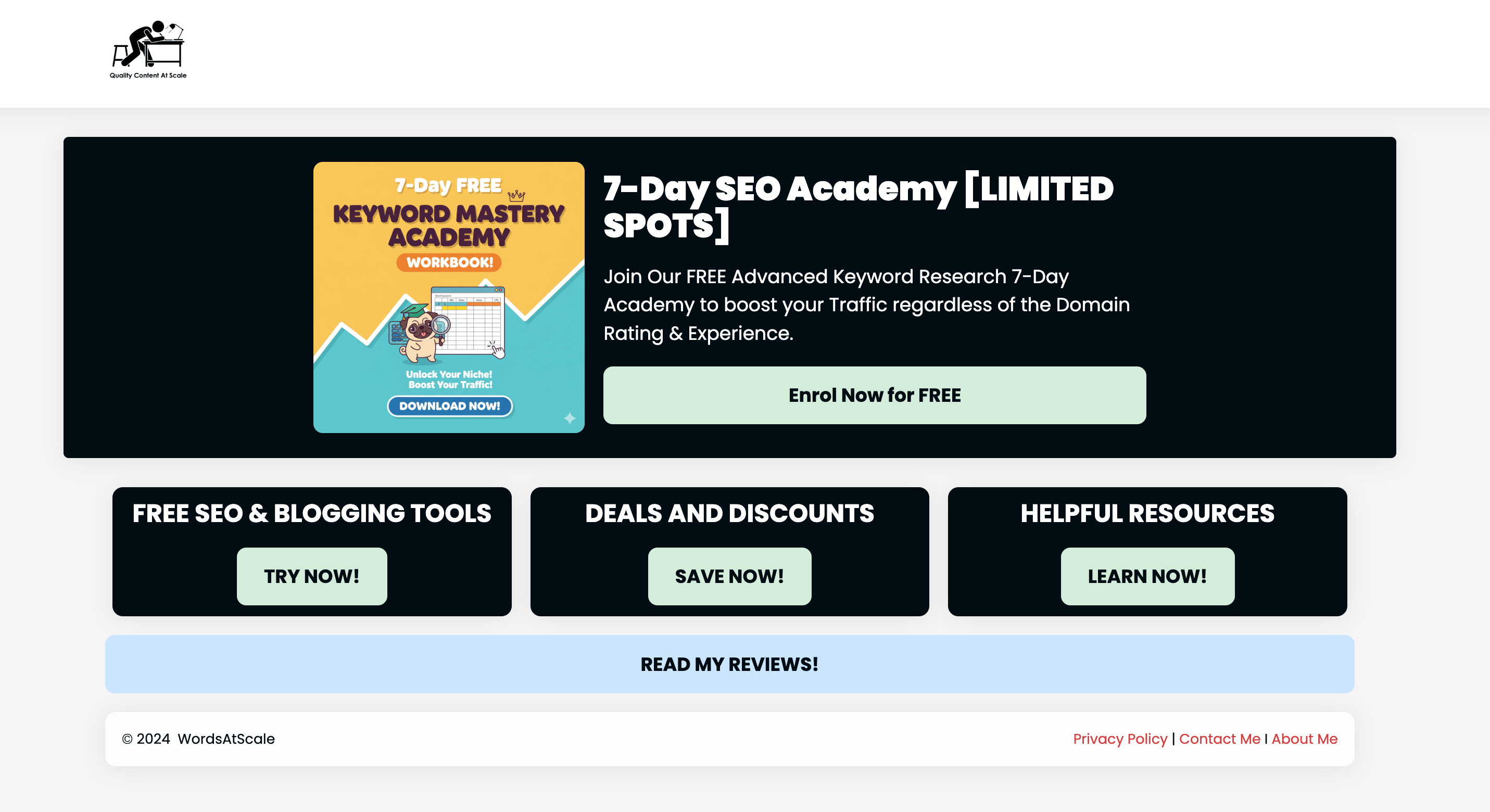
Ready to stop guessing and start ranking higher? Join our exclusive academy today to secure your spot and gain hands-on knowledge that turns keyword research into your strongest asset. Take control of your SEO journey now and visit wordsatscale.com to learn more. For an expert-driven step-by-step approach, explore our SEO content creation guide and the guide to SEO ranking factors to see how you can boost your site’s visibility starting today.
Frequently Asked Questions
What are the key benefits of keyword research for my online success?
Keyword research helps you understand your audience’s needs, find high-value search opportunities, boost search engine rankings, drive targeted traffic, improve content planning, outperform competitors, and maximize ROI on marketing efforts. Focus on conducting thorough keyword analysis to tap into these benefits effectively.
How can I identify my audience’s needs through keyword research?
You can identify audience needs by creating detailed audience personas and analyzing search queries related to your niche. Gather insights from social media feedback and user comments to align your keyword strategy with what your target audience is genuinely interested in.
What steps can I take to find high-value keywords?
Begin by analyzing search volumes, competition levels, and user intent behind search queries. Identify long-tail keywords that directly address specific audience needs, as they often demonstrate lower competition and higher engagement potential.
How does improving content structure through keyword research impact my SEO?
Improving content structure enhances user experience and increases the chances it will rank higher in search results. Organize your topics and subtopics logically based on keyword insights, which helps readers navigate your content and keeps them engaged longer.
What strategies can I use to drive consistent traffic using keyword research?
To drive consistent traffic, create content that directly answers your audience’s questions and uses long-tail keywords that align with their search intent. Focus on developing comprehensive resources, optimizing your content structure for easy navigation, and continually refining your keyword use to attract the right visitors consistently.
How can I maximize my marketing ROI through keyword research?
Maximize your marketing ROI by aligning your content with user intent and focusing on high-value keywords that reduce wasted advertising spend. Analyze which keywords bring the most qualified leads and adjust your strategies based on those insights to improve conversion rates.
Recommended
- Keyword Research Explained: Why It Truly Matters – WordsAtScale
- What Is Keyword Research? Complete SEO Breakdown – WordsAtScale
- 7 Essential Types of Keyword Research for Higher Rankings – WordsAtScale
- How to Find Keywords for Better SEO Results Fast – WordsAtScale
- Complete Guide to Amazon Keyword Research – Searchoneers
- Suchmaschinenmarketing SEO: Verständnis und Erklärung