B2B keyword research means finding the searches your buyers make, then judging each keyword by fit with your Ideal Customer Profile before volume or difficulty. Start from sales conversations, Reddit and YouTube comments, and competitor comparison pages, not from the biggest numbers in a tool.
 By Vlad Ivanov · Last updated: October 2026
Key Takeaways
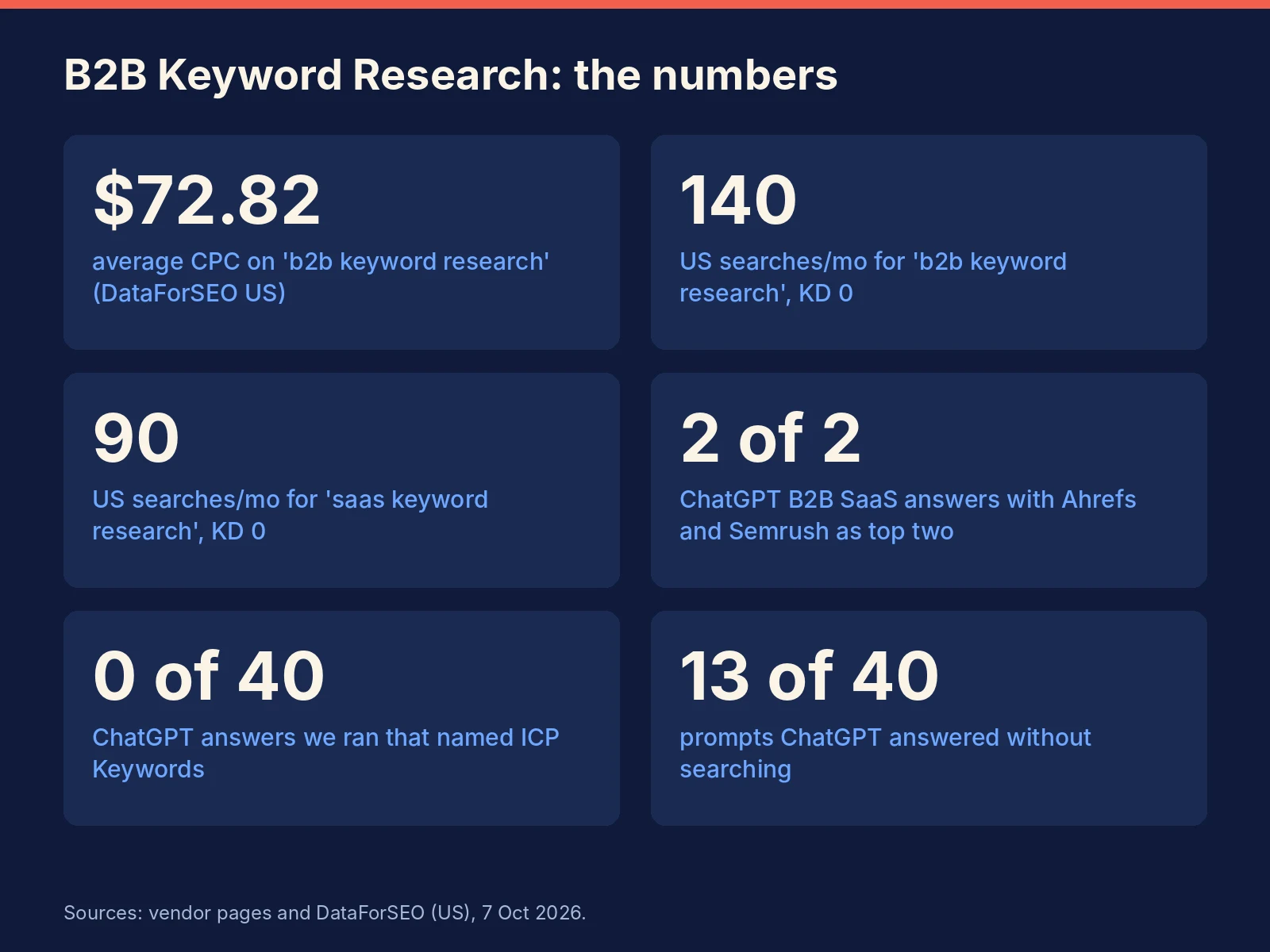
- “b2b keyword research” gets about 140 US searches a month at KD 0, with an average CPC of $72.82 (DataForSEO, October 2026). Advertisers pay that because B2B buyers are worth it.
- “saas keyword research” adds about 90 searches a month, also at KD 0.
- In our ChatGPT test, both B2B SaaS keyword-tool answers put Ahrefs and Semrush as the top two picks.
- Neither Ahrefs nor Semrush scores keywords by who is searching; both rank by volume and difficulty.
- ChatGPT searched vendors’ official pricing and feature pages in 35% of its fan-out queries, so those pages are part of B2B search now.
- ICP Keywords scores every keyword against your Ideal Customer Profile and adds keywords from Reddit, YouTube comments and AI answers (ICP Keywords).
Why is keyword research different in B2B?
Three things change in B2B. Volumes are small: the search that closes a deal may show 30 a month or none. Buyers are few and valuable, so one customer can pay for a year of content. And many searchers are not buyers: students, job seekers and competitors search the same head terms. A volume-sorted list puts all three at the top. That is why buyer intent matters more here than anywhere else.
How do you find B2B keywords step by step?
- Write the ICP in one paragraph. Company type and size, the buyer’s role, the problem that triggers the search, the words they use for it, what they compare you to.
- Collect buyer wording. Sales call notes, support tickets, demo requests, Reddit threads and YouTube comments in your niche. Copy phrases exactly.
- Expand into keywords. Turn each phrase into search forms: “how to [job]”, “[problem] software”, “[competitor] alternatives”, “[tool A] vs [tool B]”, “[tool] pricing”.
- Pull data. Volume, CPC, difficulty and intent for the list. High CPC with low volume is a B2B signal, not a warning.
- Score fit. Would your ICP type this? Mark each keyword buyer, maybe or not buyer, and drop the third group even if it is large.
- Check the live SERP. Who ranks, is there an AI Overview, is a forum in the top 3? The checklist is in the SEO competitor analysis guide.
- Group into pages by shared search results, so one page targets every keyword Google already treats as one.
Steps 5 to 7 are where most B2B teams go wrong, picking a keyword because it is big and easy. Read why keyword difficulty misleads before trusting a KD score.
Where do B2B buyer keywords come from?
| Source | What it gives you | Cost |
|---|---|---|
| Sales calls and support tickets | Exact problem wording, objections, competitor names | Free |
| Google Search Console | Queries you already appear for, including long B2B phrases | Free |
| Competitor comparison pages | The “vs” and “alternatives” terms buyers use | Free |
| Reddit and YouTube comments (how) | Natural-language questions from practitioners | Free by hand |
| AI assistant fan-out queries | What ChatGPT searches when a buyer asks for a shortlist | API or tool |
| Ahrefs / Semrush | Volumes, competitor gaps, difficulty | $129 to $139/mo |
| ICP Keywords | Keywords from your ICP, Reddit, YouTube and AI answers, scored by buyer fit | $25 pack or $29.90/mo |
Which B2B keywords convert best?
In order of how close they sit to a purchase: pricing (“[tool] pricing”), comparisons (“X vs Y”, “X alternatives”), problem plus solution (“[problem] software for [industry]”), integrations (“[tool] + [tool] integration”), then how-to for the job your product does. Definitions sit last. Examples of the comparison format: Semrush alternatives, Ahrefs vs Semrush.
How do AI assistants change keyword research for B2B?
B2B buyers increasingly start with “what’s the best X for a company like mine” in ChatGPT. In our 40-prompt test, 82% of ChatGPT’s fan-out queries named a brand, and many targeted official pricing and features pages. So in B2B, your pricing page, features page and presence on third-party comparison pages are part of your keyword strategy. Details in ChatGPT fan-out queries and how to get cited by Perplexity.
Which tool should a B2B team use?
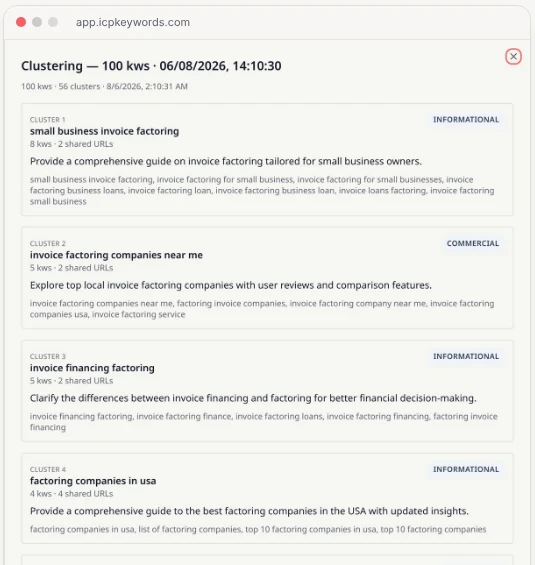
If you need backlinks, audits and rank tracking, you need Ahrefs, Semrush or SE Ranking. If your problem is that your content ranks but does not bring buyers, the gap is fit scoring. ICP Keywords asks for your Ideal Customer Profile once, generates keywords from it and from real Reddit threads, YouTube comments and AI answers, then scores each one on ICP relevance alongside difficulty, live top-3 authority, intent and SERP features. It clusters keywords by shared search results so you know how many pages to write. Many teams run it next to a suite rather than instead of one.
ICP Keywords scores every keyword against your Ideal Customer Profile. 100 free credits, 7 days, no card.
Frequently asked questions
What is B2B keyword research?
B2B keyword research is finding the searches that people who buy business products make: problems, jobs to be done, comparisons and vendor names. It differs from consumer keyword research because volumes are small and the value of one buyer is high.
How is B2B keyword research different from B2C?
B2B keywords have lower volume, longer buying cycles and several people involved in one purchase. A keyword with 40 searches a month can be worth more than one with 4,000 if the 40 are buyers. So fit matters more than volume.
What are the best tools for B2B keyword research?
Ahrefs or Semrush for competitor gaps and volumes, Google Search Console for queries you already appear for, and a tool that scores keywords by buyer fit, such as ICP Keywords. Sales call notes and support tickets are free and often the best source.
What is an ICP in keyword research?
ICP means Ideal Customer Profile: the company and person you sell to, their role, problems and buying triggers. Using it in keyword research means judging each keyword by whether that person would search it.
Should B2B companies target low-volume keywords?
Yes, when the searchers are buyers. Many B2B keywords show 0 to 50 searches a month in tools, and tools under-count long, specific phrases. Validate with the live SERP and your own sales conversations.
What keywords convert best for B2B SaaS?
Comparison and alternative searches (‘X vs Y’, ‘X alternatives’), problem-plus-solution searches, integration searches and pricing searches. Top-of-funnel definitions bring traffic but rarely pipeline.
How do AI assistants change B2B keyword research?
Buyers now ask ChatGPT for shortlists. In our test, ChatGPT ran web searches for most product comparisons and searched vendors’ official pricing and features pages, so those pages and third-party comparisons now matter as much as blog posts.
Vlad Ivanov runs the Words At Scale YouTube channel (26,000+ subscribers) and nine Search Console-verified sites, and built ICP Keywords, a keyword research tool for B2B and niche sites. LinkedIn