Most american bloggers face a tough reality: almost 90 percent of online content never ranks or gets seen by a broad audience. With search algorithms growing smarter each day, simply writing what you know is no longer enough. If you want your blog post to cut through the noise and reach the right readers, you need a clear plan. This guide offers a step by step process to help any american writer boost visibility using proven SEO and content structure strategies.
Table of Contents
- Step 1: Research Target Keywords And Search Intent
- Step 2: Organize Post Outline Around SEO Goals
- Step 3: Craft Keyword-Rich Headings And Subheadings
- Step 4: Optimize Content Layout For Readability
- Step 5: Add Internal Links And SEO Enhancements
- Step 6: Verify Structure Using SEO Tools
Quick Summary
| Key Insight | Explanation |
|---|---|
| 1. Conduct Targeted Keyword Research | Use tools to find relevant keywords that match users’ search intent and avoid keyword stuffing. |
| 2. Organize Content with Clear Outlines | Create structured outlines using primary and secondary keywords to enhance SEO and improve user engagement. |
| 3. Craft Strategic Headings and Subheadings | Optimize headings with keywords to improve visibility while ensuring they are descriptive and reader-friendly. |
| 4. Enhance Content Layout for Readability | Format text with short paragraphs and subheadings to make content easier to read and more appealing. |
| 5. Implement Strategic Internal Linking | Add relevant internal links with descriptive anchor text to enhance navigation and SEO performance. |
Step 1: Research Target Keywords and Search Intent
Successful blog post optimization begins with strategic keyword research and understanding user search intent. Your goal is to identify keywords that align precisely with what your target audience wants to learn or accomplish.
Start by using keyword research tools to uncover search terms related to your blog topic. According to research from ArXiv, search queries can be classified into two primary intent categories: exploratory and lookup. Exploratory queries suggest users want comprehensive information, while lookup queries indicate they seek specific answers. This classification helps you craft content that matches exactly what searchers want.
To effectively research keywords, follow these strategic steps:
- Use keyword research tools like Google Keyword Planner or SEMrush
- Analyze search volume and competition for potential keywords
- Look for long tail keywords with specific user intent
- Check top ranking pages for your target keywords
- Evaluate the search results to understand user expectations
As recommended by SDaData, structuring your content with a clear introduction and comprehensive topic coverage will enhance both search engine visibility and user experience. This means your chosen keywords should guide your content outline and help you address user questions directly.
Warning: Avoid keyword stuffing. Your primary goal is creating valuable content that genuinely helps readers solve their problems or answer their questions. Keywords should flow naturally within high quality, informative text.
Once you have identified your target keywords and understood search intent, you are ready to move to the next step: planning your blog post structure.
Step 2: Organize Post Outline Around SEO Goals
Creating an effective blog post outline is critical for achieving your SEO objectives and delivering value to your readers. Your outline will serve as a strategic roadmap that connects your target keywords with comprehensive content that meets user search intent.
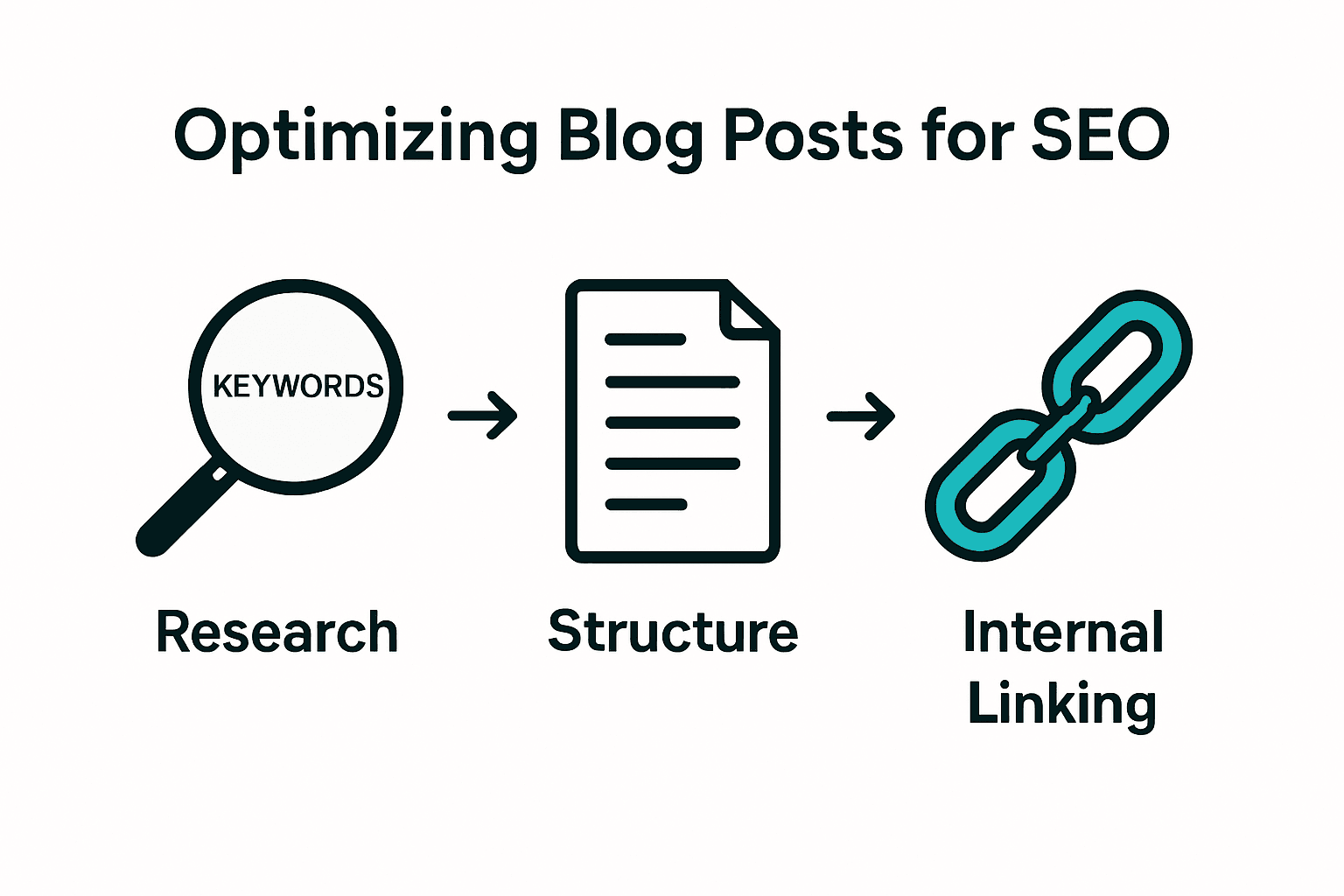
Start by using your primary and secondary keywords to develop a logical content structure. Break down your topic into meaningful sections that address different aspects of the subject. For instance, if your primary keyword is about blog post SEO, your outline might include sections like keyword research, content structure, header optimization, and internal linking strategies.
When building your outline, consider these strategic approaches:
- Map your headers to target keywords naturally
- Create a logical flow that answers potential reader questions
- Include subsections that provide in-depth exploration of subtopics
- Ensure each section contributes to overall content comprehensiveness
- Align your outline with search intent identified during keyword research
To enhance your blog post’s SEO potential, check out our guide on structuring blog content for SEO success which provides additional insights into creating search engine friendly outlines.
Warning: Avoid forcing keywords into your outline. The structure should feel natural and reader focused. Your primary goal is creating an informative, engaging piece of content that genuinely helps your audience.
Once you have a solid outline that balances SEO goals with reader needs, you are ready to start drafting your blog post content.

Step 3: Craft Keyword-Rich Headings and Subheadings
Creating strategic, keyword-optimized headings is crucial for improving your blog post’s search engine visibility and guiding readers through your content. Your headings serve as both navigational signposts for readers and critical signals for search engine algorithms.
According to Wikipedia’s entry on keyword clustering, effective content optimization involves grouping related search terms strategically. This means your headings should not just include keywords but cluster them in a way that demonstrates comprehensive topic coverage. For example, if your primary keyword is “blog post SEO”, create headings that explore different aspects like keyword research, content structure, and optimization techniques.
When crafting your headings, follow these strategic guidelines:
- Use primary keywords in your H1 and H2 headings
- Include semantic variations and long tail keywords in subheadings
- Ensure headings provide clear value and describe section content
- Maintain a logical hierarchy from H1 to H3 headings
- Balance keyword optimization with natural, reader friendly language
Research from University of Osmania emphasizes the significance of understanding search intent when structuring content. This means your headings should not just include keywords but directly address the questions and needs of your target audience.
Warning: Avoid keyword stuffing. Your headings should sound natural and provide genuine value. Prioritize reader comprehension over search engine manipulation.
Learn more about writing SEO friendly content for top rankings to refine your heading optimization skills.
Once you have crafted compelling, keyword rich headings, you are ready to begin writing your blog post content.
Step 4: Optimize Content Layout for Readability
Creating a highly readable blog post goes beyond writing compelling content. Your layout and formatting play a crucial role in keeping readers engaged and helping search engines understand your content structure.
According to research from SDaData, organizing content with clear introductions and structured topic coverage is similar to traditional essay outlines. This approach not only enhances readability but also improves overall user experience and search engine comprehension.
To create a reader friendly layout, implement these strategic formatting techniques:
- Use short paragraphs (2 to 4 sentences)
- Break up text with relevant subheadings
- Incorporate bullet points and numbered lists
- Add white space to prevent visual overwhelm
- Use bold or italics to highlight key information
- Include relevant images or graphics to illustrate points
Consider your readers visual experience. Large blocks of unbroken text can feel intimidating and cause readers to abandon your content. By creating a clean, structured layout, you make your information more accessible and digestible.
Warning: Avoid over formatting. Your layout should enhance readability, not distract from your core message. Balance visual elements with substantive content.
Explore our guide on content quality to further improve your writing and learn how layout impacts reader engagement.
With an optimized content layout, you are now ready to refine your blog post and prepare it for publication.
Step 5: Add Internal Links and SEO Enhancements
Strategic internal linking is a powerful technique to improve your blog post’s search engine optimization and guide readers through related content. By carefully connecting your pages, you create a robust website structure that both users and search engines will appreciate.
According to Wikipedia’s entry on search analytics, analyzing search data helps investigate interactions between web searchers, content, and search engines. This insight is crucial for developing effective internal linking strategies that enhance your site’s overall SEO performance.
When adding internal links, follow these strategic guidelines:
- Link to relevant, high quality content within your website
- Use descriptive anchor text that accurately represents the target page
- Prioritize links that provide additional context or deeper information
- Distribute links naturally throughout your content
- Aim for 3 to 5 internal links per blog post
- Connect topically related articles to create content clusters
Research from the University of Osmania emphasizes understanding search intent when structuring content. Internal links play a critical role in this by helping readers discover more comprehensive information about a topic.
Warning: Avoid over linking. Too many internal links can feel spammy and distract readers from your main message. Quality always trumps quantity.
Explore our guide on SEO tactics for comprehensive website growth to further refine your internal linking strategy.
With strategic internal links in place, your blog post is now optimized for both search engines and reader engagement.
Step 6: Verify Structure Using SEO Tools
Validating your blog post structure is a critical final step to ensure your content meets technical SEO requirements and provides an optimal reading experience. SEO tools can help you identify potential improvements and confirm your content is set up for search engine success.
When verifying your blog post structure, leverage specialized SEO tools to conduct a comprehensive analysis. These tools can evaluate multiple aspects of your content including readability, keyword optimization, header structure, and overall search engine compatibility.
Use these strategic verification approaches:
- Run content through readability analysis tools
- Check keyword density and distribution
- Verify header hierarchy and structure
- Analyze internal and external linking
- Test mobile responsiveness
- Review metadata and title tag optimization
Warning: While SEO tools provide valuable insights, they should not replace human judgment. Always prioritize creating high quality, reader focused content that genuinely serves your audience.
Learn more about why SEO tools are essential for content optimization and how they can help refine your blog post strategy.
With your blog post structure thoroughly verified, you are now ready to publish and promote your SEO optimized content.
Master SEO Blog Post Structure with Proven Tools and Training
Struggling to organize your blog posts to truly match your readers’ search intent and boost your SEO performance Introducing a way to overcome common challenges like keyword stuffing and unclear content flow while creating engaging, optimized blog posts. Our platform offers advanced keyword research training, effective tools, and actionable strategies that directly address the pain points covered in the guide such as keyword optimization, header structuring, and strategic internal linking.

Ready to transform your blog posts into SEO powerhouses Take the next step by joining the free 7-day advanced keyword research academy at wordsatscale.com. Explore how to precisely target your audience and learn how to craft high-quality, search-friendly content with expert guidance and free tools. Visit our homepage now and unlock your blog’s full potential by mastering SEO post structure through proven tactics and continuous support.
Frequently Asked Questions
How do I identify target keywords for my blog posts?
To identify target keywords, use keyword research tools to uncover search terms related to your topic. Make a list of keywords with high search volume and low competition, and check for long-tail keywords that align with user intent.
What steps should I take to organize my blog post outline around SEO goals?
Start by mapping your primary and secondary keywords to create a logical structure for your blog post. Break down the topic into sections that directly address reader questions, ensuring the outline supports comprehensive coverage.
How can I create keyword-rich headings for my blog post?
To create keyword-rich headings, include primary keywords in your main headings and use relevant variations in subheadings. Make sure that each heading is clear, valuable, and reflects the content of the section underneath it.
What formatting techniques should I use to optimize content layout for readability?
Use short paragraphs, relevant subheadings, and bullet points to enhance readability in your blog post. Incorporate white space and use bold or italics to highlight key information, making it easier for readers to scan the content.
How do I incorporate internal links into my blog posts effectively?
Incorporate internal links by connecting your blog post to relevant content on your site using descriptive anchor text. Aim for 3 to 5 internal links that provide additional context or relevant information to enhance user experience.
What tools can I use to verify the structure of my blog post for SEO?
Use SEO analysis tools to check your blog post’s readability, keyword optimization, and header structure. Perform a comprehensive analysis to ensure your content meets technical SEO requirements and provides a positive user experience.