
Most websites never make it past the second page of search results, yet that first page captures over 90 percent of traffic. With so much competition online, understanding SEO is crucial if you want your content to reach and engage real people. This guide explains the building blocks of SEO, from proven ranking strategies to the biggest mistakes that keep sites hidden from view.
Table of Contents
- Defining SEO And Fundamental Concepts
- Main Types Of SEO Strategies Explained
- How Search Engines Evaluate Websites
- Critical SEO Ranking Factors To Know
- Common SEO Mistakes And How To Avoid
Key Takeaways
| Point | Details |
|---|---|
| SEO Definition | SEO is the process of enhancing website visibility to attract organic traffic from search engines without paid advertisement placement. |
| Key SEO Strategies | Effective SEO involves keyword research, on-page optimization, technical SEO, and link building to improve performance in search results. |
| Evaluation Factors | Search engines assess websites based on content relevance, loading speed, mobile responsiveness, and user engagement metrics. |
| Common Mistakes | Avoid common SEO pitfalls such as keyword stuffing, neglecting mobile optimization, and creating low-quality content to achieve better rankings. |
Defining SEO and Fundamental Concepts
Search engine optimization (SEO) is the strategic process of improving website visibility and attracting quality unpaid traffic from search engines. According to Wikipedia, SEO specifically targets organic traffic rather than direct or paid traffic methods. This means your content works to naturally appear higher in search results without paying for advertisement placement.
At its core, SEO involves understanding and implementing techniques that help search engines recognize and prioritize your web content. As research from IJSRCSEIT explains, SEO fundamentally affects how web pages appear in search results by controlling specific ranking factors through complex algorithms. These algorithms evaluate multiple elements to determine which web links deserve top positioning.
The primary goals of SEO are multifaceted:
- Increase website visibility
- Attract high-quality, targeted traffic
- Improve user experience and site performance
- Build credibility and authority in your industry
Successful SEO requires a comprehensive approach that combines technical optimization, high-quality content creation, and strategic keyword targeting.
For marketers looking to dive deeper into ranking strategies, check out our SEO for Beginners guide to understand how to effectively improve your online presence.
Main Types of SEO Strategies Explained
Search engine optimization encompasses several strategic approaches designed to improve website visibility and ranking. According to research from AJEEE, there are key components that form the foundation of an effective SEO strategy. These interconnected strategies work together to enhance a website’s performance in search engine results.
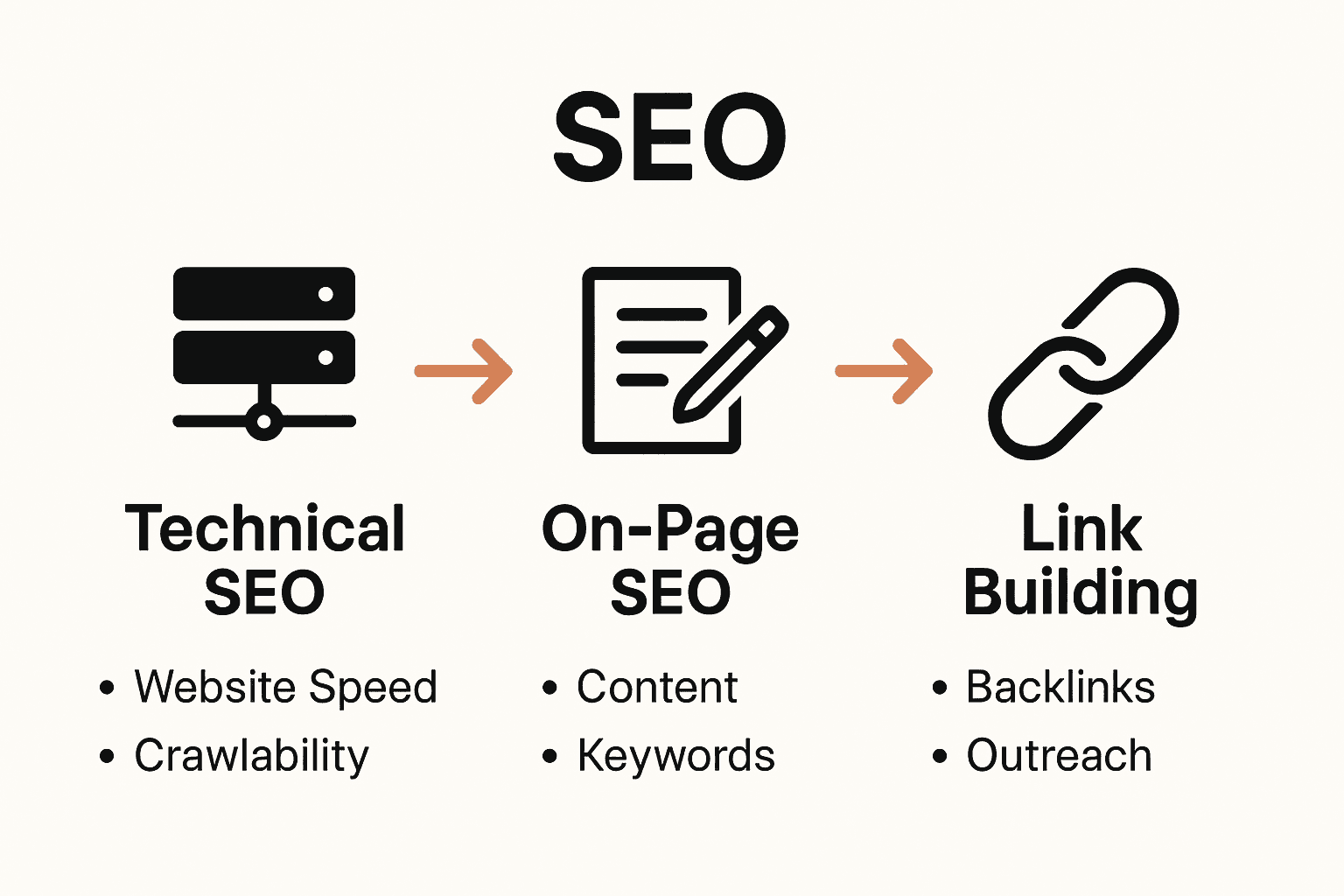
The primary types of SEO strategies include:
- Keyword Research: Identifying and targeting specific search terms your audience uses
- On-Page Optimization: Improving individual webpage elements like content, titles, and meta descriptions
- Technical SEO: Enhancing website infrastructure and performance
- Link Building: Increasing website authority through quality external links
Link building, in particular, plays a crucial role in SEO success. As explained by Wikipedia, link building is a strategy focused on increasing the number and quality of inbound links to a webpage, ultimately improving search engine rankings. This process involves creating valuable content that other reputable websites want to reference and link back to.
For marketers looking to dive deeper into understanding how these strategies interconnect, our SEO Ranking Factors guide provides comprehensive insights into developing a robust SEO approach that can significantly enhance your online visibility.
How Search Engines Evaluate Websites
Search engines employ complex algorithms to assess and rank websites, considering multiple sophisticated criteria beyond simple keyword matching. As Wikipedia explains, these evaluation processes examine how search engines work, the specific algorithms dictating search results, user search behaviors, and the actual keywords people type into search queries.
Key Evaluation Factors that search engines analyze include:
- Content relevance and quality
- Website loading speed
- Mobile responsiveness
- User engagement metrics
- Internal and external link structures
- Website security and technical infrastructure
One critical aspect of website evaluation involves understanding competitor backlinking strategies. As noted by Wikipedia, analyzing the backlink profiles of competing websites provides valuable insights into effective link-building approaches. Search engines use these backlink networks to determine a website’s authority, credibility, and potential value to users.
Website owners looking to improve their search engine rankings should focus on creating high-quality, relevant content and developing a robust technical foundation. For a comprehensive breakdown of technical optimization techniques, check out our Technical SEO Checklist that can help boost your search rankings effectively.
Critical SEO Ranking Factors to Know
Successful search engine optimization requires a strategic understanding of multiple critical ranking factors that determine a website’s visibility and performance. Link building plays a pivotal role in this process, as Wikipedia explains, by increasing the number of high-quality links pointing to a website and consequently improving search engine result rankings.
The most essential SEO ranking factors include:
- Domain authority
- Content quality and relevance
- Website loading speed
- Mobile responsiveness
- User engagement metrics
- Internal and external linking structure
- Technical website performance
Another crucial strategy is keyword clustering, which helps websites strategically organize and target search terms. According to Wikipedia, this practice involves segmenting target search terms into groups relevant to each website page, ultimately aiming to achieve higher search engine rankings. By carefully mapping keywords and creating topically focused content, websites can significantly improve their search visibility.

For marketers seeking to elevate their SEO strategy, understanding how to craft high-quality, targeted content is paramount. Learn more about creating compelling, search-friendly content in our guide on writing SEO-friendly content that can help boost your website’s ranking potential.
Common SEO Mistakes and How to Avoid
Navigating the complex world of search engine optimization requires understanding both effective strategies and potential pitfalls. As Wikipedia explains, successful SEO involves comprehending how search engines work, their algorithmic processes, and user search behaviors.
The most common SEO mistakes marketers and website owners frequently make include:
- Keyword stuffing
- Neglecting mobile optimization
- Ignoring site speed and performance
- Creating low-quality or duplicate content
- Overlooking technical SEO elements
- Inconsistent or poor link-building practices
- Failing to update and refresh content regularly
Link building presents another critical area where many websites stumble. According to Wikipedia, effective link building requires carefully increasing the number and quality of inbound links to a webpage, which many novice marketers misunderstand or execute poorly. Quality always trumps quantity when developing a robust linking strategy.
For marketers seeking to refine their approach and avoid these common pitfalls, understanding the nuances of content strategy is crucial. Our guide on why blogging matters for SEO provides deeper insights into creating a sustainable, effective search optimization approach that minimizes costly mistakes.
Master SEO Fundamentals to Skyrocket Your Website Traffic
Understanding what SEO truly means and how each strategy works can feel overwhelming. You want to attract quality organic traffic, avoid common pitfalls like poor link building, and optimize your site technically, but navigating these complex elements alone is frustrating. This guide uncovered essential concepts like keyword clustering, backlink quality, and competitor analysis that are vital steps toward shaping a winning SEO plan.

Take control of your SEO journey today with wordsatscale.com, where you’ll find expert training and practical tools designed for marketers and website owners just like you. Start with our SEO Ranking Factors guide to grasp the core elements search engines use to evaluate sites. Then, power up your strategy by visiting our Technical SEO Checklist to ensure your site runs smoothly and impresses algorithms alike. Don’t wait to grow your online visibility. Visit wordsatscale.com now and secure your spot in the free 7-day advanced keyword research academy to master SEO tactics that work.
Frequently Asked Questions
What is SEO and why is it important?
SEO, or search engine optimization, is the process of enhancing a website’s visibility in search engine results. It focuses on attracting organic traffic rather than relying on paid advertisements, which ultimately helps improve user experience and builds authority in your industry.
What are the main types of SEO strategies?
The primary types of SEO strategies include keyword research, on-page optimization, technical SEO, and link building. Each of these strategies plays a critical role in improving a website’s search engine ranking and overall online presence.
How do search engines evaluate websites for ranking?
Search engines use complex algorithms to assess websites based on various factors, including content relevance, site loading speed, mobile responsiveness, user engagement metrics, and the quality of internal and external links.
What are common SEO mistakes to avoid?
Common SEO mistakes include keyword stuffing, neglecting mobile optimization, ignoring site speed, creating low-quality content, and inconsistent link-building practices. Avoiding these pitfalls can significantly improve your website’s performance in search rankings.