ChatGPT fan-out queries are the hidden web searches ChatGPT runs before it answers a prompt. In our test of 40 buyer prompts, 27 triggered searches, producing 65 fan-out queries, and 82% of them named a specific brand.
 By Vlad Ivanov · Last updated: October 2026
Key Takeaways
- Google says AI Mode uses a “query fan-out technique”, breaking a question into subtopics and issuing many queries at once (Google, May 2025).
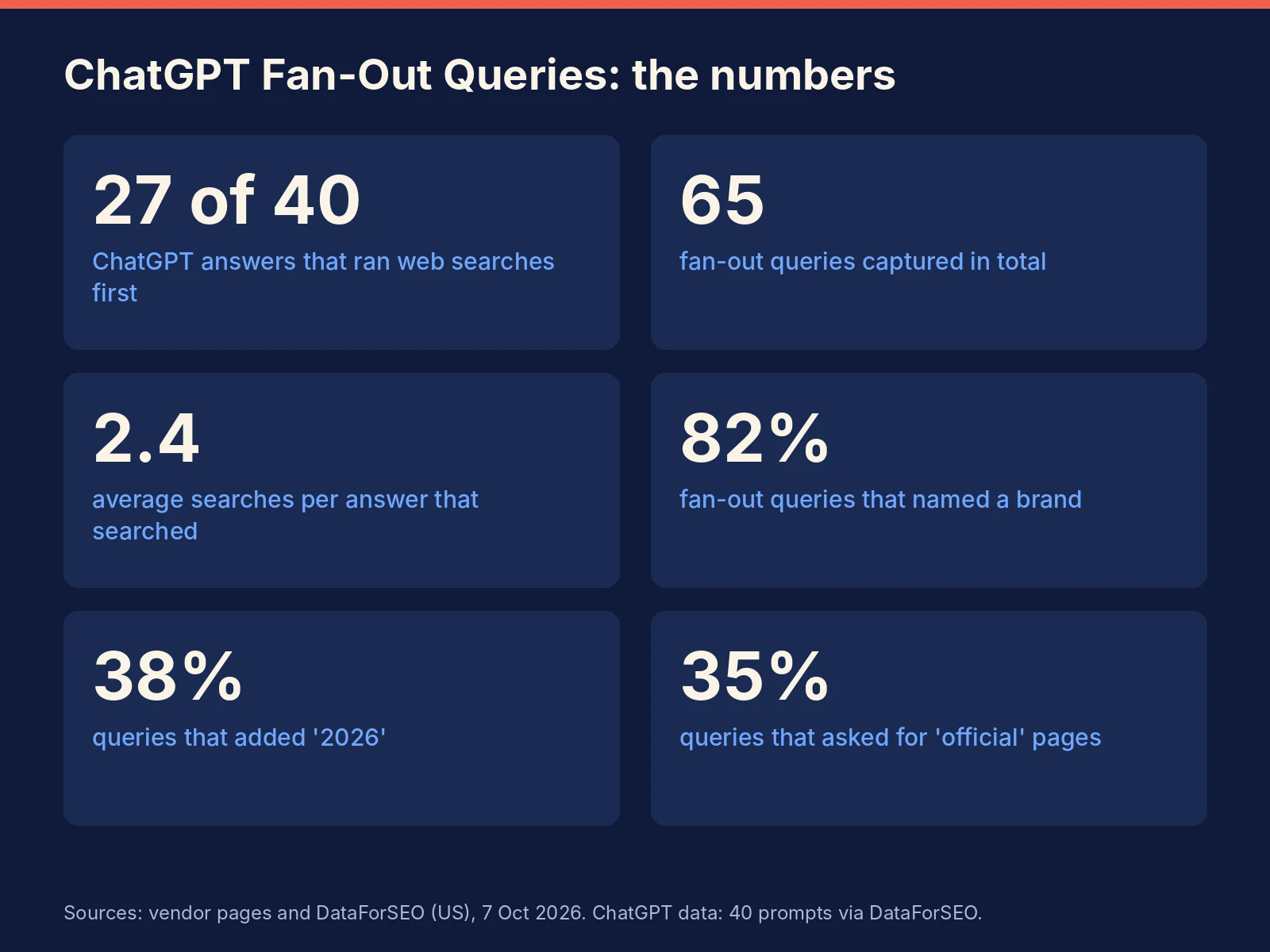
- In our 40-prompt ChatGPT test (7 October 2026), 27 answers ran web searches and produced 65 fan-out queries, 2.4 per answer on average, at most 5.
- 82% of those queries named a brand, so ChatGPT mostly searches for tools it already knows about.
- 38% added “2026” and 35% asked for “official” pages; 32% were about pricing.
- 13 of 40 prompts triggered no search at all, so ChatGPT answered from its training data.
- Fan-out queries average 8.8 words, far longer than the queries people type, so most show no volume in keyword tools.
What are fan-out queries?
A fan-out query is one of the searches an AI assistant runs on your behalf to answer a single prompt. You type one question; the assistant splits it into several narrower searches, reads the results, and writes one answer from them. Google named the technique when it launched AI Mode: it “breaks down your question into subtopics and issues a multitude of queries simultaneously” (Google). ChatGPT search works the same way when it decides to browse.
What does ChatGPT actually search for?
We ran 40 buyer prompts about keyword research tools through ChatGPT with web search on, using DataForSEO’s ChatGPT scraper, which returns each answer with the fan-out queries behind it. Here is a sample, exactly as ChatGPT wrote them:
| Prompt we asked | Fan-out queries ChatGPT ran (first 3) |
|---|---|
| best semrush alternative that is pay as you go | SEO tools pay as you go credits Semrush alternative Ahrefs SE Ranking DataForSEO Keywords Everywhere pricing 2026 site:lowfruits.io pricing pay as you go SEO site:keywordseverywhere.com pricing credits SEO |
| semrush alternatives for a small team | best SEMrush alternatives small business Ahrefs Moz Ubersuggest SE Ranking pricing features 2026 SE Ranking pricing official Ubersuggest pricing official |
| best mangools kwfinder alternative | best KWFinder alternatives Semrush Ahrefs LowFruits SE Ranking Keyword Insights 2026 KWFinder Mangools pricing keyword research official SE Ranking keyword research pricing official |
| kwfinder alternatives for niche sites | KWFinder alternatives niche keyword research tools Ahrefs Semrush LowFruits Keysearch Mangools 2026 LowFruits keyword research features SERP weak spots official KeySearch keyword research features official |
| best answerthepublic alternative | AnswerThePublic alternatives keyword research tools AlsoAsked Semrush Ahrefs KeywordTool.io LowFruits AnswerThePublic official features pricing alternatives 2026 |
| tools like answerthepublic that use real questions from reddit | tools like AnswerThePublic Reddit questions keyword research Reddit question mining Reddit question research tools real questions Reddit marketers AlsoAsked Keyworddit GummySearch |
What patterns show up across 65 fan-out queries?
| Pattern | Share of 65 queries | What it means for you |
|---|---|---|
| Names a brand | 82% (53) | ChatGPT searches for tools it already knows. Get mentioned on pages it reads. |
| Adds the year (2026) | 38% (25) | Put the year in titles of comparison and pricing pages. |
| Asks for “official” pages | 35% (23) | Your own pricing and features pages are read directly. |
| About pricing | 32% (21) | A crawlable /pricing page with prices in text matters. |
| Uses site: on a vendor | 12% (8) | ChatGPT checks claims on the vendor’s own domain. |
The practical lesson: if a buyer asks ChatGPT for “the best X”, the answer is assembled from the brands ChatGPT already associates with X, checked against those brands’ own pricing and feature pages. A tool that is missing from third-party lists, or has no crawlable pricing page, never enters the fan-out. That is the same pattern I saw in the Semrush alternatives and Ahrefs alternatives research.
How can you find fan-out queries for your topic?
1. Capture them with an API. DataForSEO’s ChatGPT scraper returns the answer, the cited sources and the fan-out queries for any prompt you send, for a fraction of a cent per prompt (DataForSEO). This is how the data above was collected. You need code, or Claude, to run it.
2. Use a keyword tool built for it. The LLM Keywords method in ICP Keywords shows the follow-up queries ChatGPT, Gemini and Perplexity run on your topic, with a consensus filter across models, and then scores them against your Ideal Customer Profile like any other keyword.
3. Work backwards from citations. Ask the assistant your buyer’s question, open every source it cites, and note what each page answers. Slower, but free.
How do you optimise for fan-out queries?
Do not build one page per query; most are too long and too specific. Instead, make sure the pages the fan-out queries look for exist and answer cleanly: a pricing page with plain-text prices and the year in the title, a features page with one heading per capability, and mentions on the comparison pages ChatGPT already cites. Then answer the core question in the first sentence of each section, which is what assistants lift. I covered the citation side in how to get cited by Perplexity and the click side in AI Overviews CTR statistics.
Why do some prompts trigger no fan-out at all?
13 of our 40 prompts produced no searches. They were a mix of how-to questions (“how to find keywords from YouTube comments”, “how to check if a keyword has buyer intent”) and requests for niche tools with no established leader (YouTube comment research, buyer intent checkers, ICP keyword tools, YouTube content gap tools). ChatGPT answered those from training data. Prompts about established tools such as Ahrefs, Semrush or Mangools almost always triggered fresh searches. For niche topics, being cited depends on being widely mentioned before the model’s training cutoff, which is a reason to publish early. If you are researching keywords for a new site, combine AI query data with classic zero-DR keyword research, news keyword research and buyer intent keywords. The same research behind this test also fed why keyword difficulty misleads.
How did we run this test?
40 prompts, two per topic across 20 keyword-research topics, sent through DataForSEO’s ChatGPT LLM scraper (US, English) on 7 October 2026 with web search enabled. We recorded the fan-out queries, cited sources and brands named in each answer. Percentages are of the 65 fan-out queries captured. The full prompt list is in our content plan; results will differ for other topics and over time.
ICP Keywords’ LLM Keywords method pulls the follow-up queries AI assistants run, then scores them against your buyer. 100 free credits, 7 days, no card.
Frequently asked questions
What are fan-out queries?
Fan-out queries are the extra searches an AI assistant runs behind the scenes to answer one prompt. Google describes its AI Mode as breaking a question into subtopics and issuing many queries at once, and ChatGPT search does something similar.
Does ChatGPT use query fan-out?
Yes, when it searches the web. In our test of 40 buyer prompts on 7 October 2026, ChatGPT ran web searches for 27 of them and issued 65 fan-out queries in total, 2.4 per answer on average.
How can I see ChatGPT’s fan-out queries?
Run prompts through a tool that captures them. We used DataForSEO’s ChatGPT scraper, which returns the fan-out queries with each answer. ICP Keywords’ LLM Keywords method shows follow-up queries across ChatGPT, Gemini and Perplexity with a consensus filter.
Why do fan-out queries matter for SEO?
Because the pages that answer the fan-out queries are the pages the AI reads and cites. If ChatGPT searches for ‘LowFruits pricing official’ before recommending tools, a clear pricing page decides whether you are in the answer.
Do fan-out queries have search volume?
Many do not show volume in keyword tools, because they are long and machine-written. Treat them as a map of what the AI needs to read, not as keywords to rank for one by one.
What patterns did ChatGPT’s fan-out queries show?
In our 65 queries, 82% named a brand, 38% added the current year (2026), 35% asked for ‘official’ pages, 32% asked about pricing, and 12% used a site: operator to search one vendor’s site.
Is query fan-out the same in Google AI Mode and ChatGPT?
The idea is the same: split a prompt into many searches and combine the results. The queries themselves differ by engine, so checking more than one assistant gives a fuller picture.
Vlad Ivanov runs the Words At Scale YouTube channel (26,000+ subscribers) and nine Search Console-verified sites, and built ICP Keywords, a keyword research tool for B2B and niche sites. LinkedIn