Search engines are getting smarter every day. AI now powers everything from how websites show up in results to the kind of content you see first. Nearly 60 percent of marketers report using AI tools to refine their SEO strategies. This shift makes understanding the real impact of artificial intelligence on SEO more urgent than ever. Clear insights into AI’s evolving role can help you stay ahead as digital competition grows fiercer and search algorithms become more unpredictable.
Table of Contents
- Defining The Role Of AI In SEO
- Types Of AI Technologies Used In SEO
- How AI Enhances Search Rankings And Content
- Key AI-Driven SEO Tools And Applications
- Risks, Limitations, And Common Pitfalls
Key Takeaways
| Point | Details |
|---|---|
| Role of AI in SEO | AI revolutionizes SEO by enabling automated content optimization, intelligent keyword research, and predictive analytics, enhancing overall website performance. |
| AI Technologies | Key technologies like machine learning, NLP, and predictive analytics enhance how search engines understand context and user intent beyond traditional methods. |
| Integration with Human Expertise | Effective SEO strategies blend AI’s capabilities with human creativity and strategic thinking, leveraging both for optimal results. |
| Risks and Limitations | While AI enhances SEO, challenges such as algorithmic bias and privacy concerns must be managed to prevent undermining marketing efforts. |
Defining the Role of AI in SEO
Artificial Intelligence (AI) is fundamentally transforming search engine optimization from a manual, time-consuming process into a dynamic, intelligent ecosystem. According to research from ijnrd, AI technologies are revolutionizing how websites optimize their digital presence, enhancing search discovery and website performance through sophisticated algorithms and predictive analysis.
AI’s role in SEO extends across multiple critical domains. As investigated by jgrec, these domains include technical optimization, content generation, keyword research, and strategic link building. The technology enables marketers to move beyond traditional optimization techniques by providing intelligent insights that adapt in real-time to search engine algorithm changes.
Key applications of AI in SEO include:
- Automated content optimization
- Intelligent keyword research
- Predictive user behavior analysis
- Advanced competitor tracking
- Personalized search result generation
While AI offers unprecedented capabilities, it’s not a complete replacement for human expertise. The most effective SEO strategies will combine AI’s computational power with human creativity and strategic thinking. Marketers who understand how to leverage these technologies will gain significant competitive advantages in increasingly complex digital landscapes.
For a comprehensive understanding of SEO fundamentals, check out our What Is SEO? Complete Guide for Marketers.
Types of AI Technologies Used in SEO
Artificial Intelligence encompasses several sophisticated technologies that are transforming SEO strategies. According to research from ouci, generative AI and natural language processing (NLP) are revolutionizing how search engines understand and deliver user-centric content. These technologies enable more semantic and contextually relevant search results by analyzing user intent beyond traditional keyword matching.
Research from ijariit highlights key AI technologies driving SEO innovation. These include:
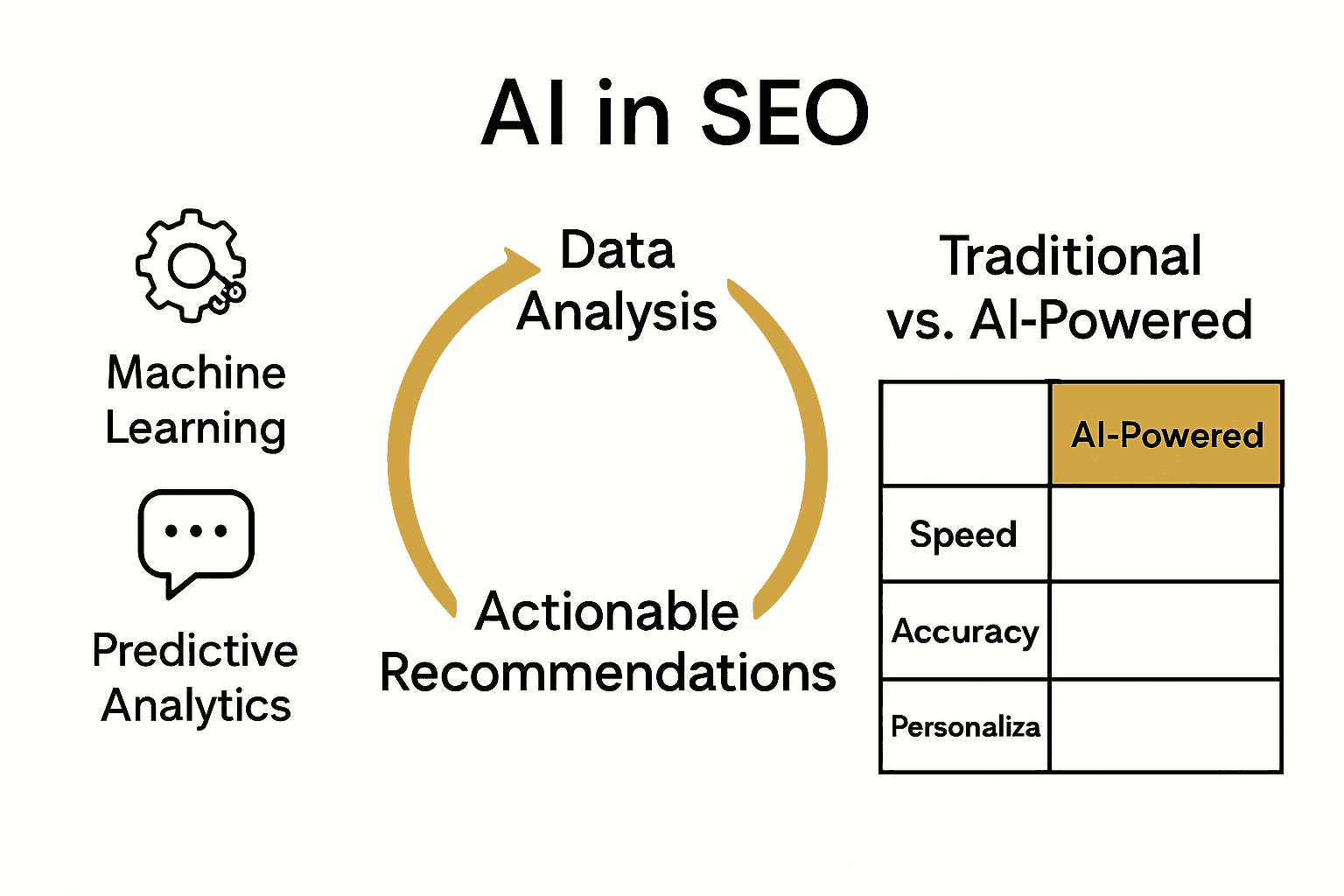
- Machine Learning Algorithms: Predicting search trends and user behavior
- Natural Language Processing: Understanding content context and semantic relationships
- Predictive Analytics: Forecasting search engine ranking opportunities
- Neural Networks: Generating intelligent content recommendations
- Computer Vision: Analyzing visual content and image search optimization
Each AI technology offers unique capabilities that enhance different aspects of SEO performance. Machine learning algorithms can predict emerging search trends, while NLP helps search engines comprehend content nuance. These technologies work synergistically to provide more intelligent, adaptive search experiences that benefit both users and content creators.

For deeper insights into advanced SEO strategies, explore our 7 Essential Types of SEO Techniques for Better Rankings.
How AI Enhances Search Rankings and Content
AI is dramatically transforming how websites achieve and maintain high search rankings. According to research from ijnrd, advanced AI technologies are revolutionizing search discovery by providing sophisticated mechanisms for understanding and optimizing content beyond traditional SEO techniques. These intelligent systems analyze complex user behaviors, content relevance, and semantic relationships to improve website visibility.
Research from jgrec highlights several critical ways AI enhances search rankings:
- Intelligent content optimization that matches user intent
- Advanced keyword research using predictive analytics
- Dynamic content generation aligned with search trends
- Semantic analysis to understand content context
- User experience prediction to improve engagement metrics
AI’s most powerful impact lies in its ability to provide real-time, data-driven insights. Machine learning algorithms continuously analyze search patterns, allowing websites to adapt their content strategy dynamically. This means content can be modified instantly to match evolving user preferences and search engine algorithm changes, creating a more responsive and intelligent approach to SEO.
To master the art of creating high-ranking content, explore our comprehensive guide on how to write SEO-friendly content that leverages these cutting-edge AI technologies.
Key AI-Driven SEO Tools and Applications
AI-powered SEO tools are revolutionizing digital marketing strategies. According to research from ijnrd, advanced AI applications are transforming how businesses approach search optimization by providing unprecedented insights into search discovery and website performance. These intelligent tools go beyond traditional analytics, offering predictive and adaptive capabilities that dynamically enhance online visibility.
Research from jgrec highlights key AI-driven SEO tool categories:
- Content Optimization Tools: Analyzing and improving content relevance
- Keyword Research Platforms: Generating intelligent search term predictions
- Competitor Analysis Systems: Tracking and benchmarking digital performance
- Technical SEO Diagnostics: Identifying and resolving website optimization issues
- Predictive Ranking Algorithms: Forecasting potential search result placements
The most sophisticated AI SEO tools leverage machine learning to provide real-time recommendations. These systems continuously analyze vast datasets, learning from search patterns, user behaviors, and algorithm changes. They can automatically suggest content improvements, identify emerging keyword opportunities, and predict potential ranking shifts before they occur.
For those looking to dive deeper into strategic keyword research, explore our guide on Best Keyword Research Tools that can transform your SEO approach.
Risks, Limitations, and Common Pitfalls
Artificial Intelligence in SEO is not without significant challenges and potential drawbacks. According to research from ijnrd, ethical considerations and potential research gaps remain critical concerns in AI-driven optimization strategies. While AI offers remarkable capabilities, it also introduces complex risks that can undermine digital marketing efforts if not carefully managed.
Research from jgrec identifies several key risks and limitations:
- Algorithmic Bias: AI systems potentially reinforcing existing search prejudices
- Content Authenticity Challenges: Difficulty distinguishing between human and AI-generated content
- Over-Reliance on Predictive Models: Potential loss of human creativity and nuance
- Data Privacy Concerns: Risks associated with extensive data collection and processing
- Rapid Technological Obsolescence: Constant need to update AI systems
The most significant pitfall lies in treating AI as a complete replacement for human expertise. While AI can process and analyze data at unprecedented speeds, it lacks the contextual understanding and creative intuition that human marketers bring. Successful SEO strategies require a balanced approach that combines AI’s computational power with human strategic thinking, ensuring that technological capabilities are guided by nuanced professional judgment.
To navigate these complex challenges effectively, explore our comprehensive guide on SEO techniques that emphasize a holistic, human-centered approach to digital marketing.
Unlock the Full Potential of AI in Your SEO Strategy
Understanding the crucial role of AI in SEO can feel overwhelming as you try to navigate complex technologies like machine learning, natural language processing, and predictive analytics. You want to stay ahead, but dealing with algorithm changes, content optimization, and keyword research challenges can feel like an uphill battle. This guide shows how AI transforms traditional SEO methods yet also highlights the importance of combining smart tools with your creative insights.
Take control of these challenges with the right support. Join the free 7-day advanced keyword research academy at WordsAtScale to gain hands-on experience with AI-driven keyword strategies.

Boost your SEO confidence by accessing powerful free tools and actionable resources designed for marketers and website owners aiming for real organic growth. Don’t wait until your competitors master AI before you do. Visit WordsAtScale now and start transforming your SEO approach today. Explore how to craft SEO-friendly content and discover the Best Keyword Research Tools to outsmart the evolving search landscape.
Frequently Asked Questions
What is the role of AI in SEO?
AI is transforming SEO by enabling automated content optimization, intelligent keyword research, predictive user behavior analysis, and personalized search result generation, thereby enhancing website performance and search discovery.
How does AI improve search rankings?
AI improves search rankings by analyzing complex user behaviors and content relevance, allowing for intelligent content optimization and dynamic adjustments based on real-time data and evolving search engine algorithms.
What are some key AI technologies used in SEO?
Key AI technologies in SEO include machine learning algorithms, natural language processing (NLP), predictive analytics, and computer vision, which enhance different aspects of SEO performance by understanding user intent and predicting trends.
What are the risks of using AI in SEO?
Risks include algorithmic bias, challenges with content authenticity, potential over-reliance on predictive models, data privacy concerns, and the need for constant updates to AI systems, which could lead to significant pitfalls if not managed effectively.
Recommended
- Why SEO Matters: Complete Guide for Digital Success – WordsAtScale
- What Is SEO? Complete Guide for Marketers – WordsAtScale
- Complete Guide to the Role of SEO Audits – WordsAtScale
- SEO for Beginners: Complete Guide to Ranking Success – WordsAtScale
- The Impact of AI on SEO in 2025: Key Changes for Businesses