
Most American business owners quickly discover that ranking on search engines depends on more than just catchy headlines. With over 90 percent of website traffic beginning with a search, keywords play a major role in connecting people to the information or products they want. Understanding the true meaning and application of keywords can help you craft digital content that attracts the right audience, increases organic visits, and outperforms competitors.
Table of Contents
- Core Meaning of Keywords In SEO
- Different Keyword Types And Uses
- How Keywords Drive Organic Traffic
- Role Of Keywords In Content Strategy
- Common Keyword Mistakes To Avoid
Key Takeaways
| Point | Details |
|---|---|
| Importance of Keywords | Keywords are essential for connecting user queries with relevant web content, enabling search engines to effectively understand context and relevance. |
| Types of Keywords | Understanding various types such as short-tail, long-tail, and semantic keywords is crucial for strategic content creation and user intent alignment. |
| Driving Organic Traffic | Incorporating targeted keywords into high-quality content is key for generating organic traffic and improving search rankings. |
| Avoiding Common Mistakes | Prioritize user experience over keyword volume to enhance engagement and relevance, steering clear of practices like keyword stuffing. |
Core Meaning of Keywords in SEO
Keywords are strategic terms and phrases that connect user search queries with relevant web content, serving as critical communication signals between websites and search engines. When strategically selected and implemented, keywords help search engines understand the context, relevance, and purpose of web pages. They function as digital signposts that guide search algorithms toward matching user intent with the most appropriate content.
At their fundamental level, keywords represent the core language of search. They translate human questions and needs into machine-readable signals that search engines like Google can interpret and rank. Keyword research reveals precise user language, allowing content creators to align their material with specific audience search behaviors. This means understanding not just what words people use, but how they structure their queries and what underlying information they seek.
Effective keywords go beyond simple word matching. They encompass semantic variations, user intent, and contextual relevance. Search engines now use sophisticated natural language processing techniques that analyze keywords within broader linguistic frameworks. This means keywords must be thoughtfully integrated to demonstrate topical authority and comprehensive coverage of a subject. A well-executed keyword strategy involves identifying primary terms, exploring related concepts, and creating content that genuinely addresses user questions with depth and precision.
Different Keyword Types and Uses
Keywords are not a monolithic concept but rather a diverse ecosystem with multiple strategic classifications that serve different search optimization purposes. Understanding keyword research reveals several critical categories that digital marketers and content creators must master to achieve robust search performance.
Primary keyword types include short-tail, long-tail, and semantic keywords. Short-tail keywords are broad, generic terms typically consisting of one or two words, such as “marketing” or “shoes.” These attract high search volume but face intense competition. Long-tail keywords, conversely, are more specific phrases like “affordable running shoes for flat feet,” which have lower search volumes but demonstrate clearer user intent and often convert more effectively. Semantic keywords represent conceptually related terms that help search engines understand context and topical depth beyond literal word matching.

Beyond categorical distinctions, keywords can also be classified by user intent: informational (seeking knowledge), navigational (looking for specific websites), transactional (ready to purchase), and commercial investigation (comparing products). Each intent category requires nuanced content strategies that align keyword selection with precise user expectations. Successful SEO practitioners recognize that effective keyword usage is not about volume, but about strategic alignment between search query complexity, content relevance, and audience needs.
How Keywords Drive Organic Traffic
Organic traffic represents the holy grail of digital marketing, with strategic keywords functioning as the primary navigational tools that connect potential audiences with relevant content. Keyword research reveals the intricate pathways users navigate when seeking information, products, or solutions online. Search engines utilize these keywords as critical signals to match user queries with the most relevant web pages, effectively bridging the gap between user intent and content discovery.
The mechanics of keyword-driven organic traffic are rooted in sophisticated algorithmic matching processes. When websites consistently produce high-quality content that strategically incorporates targeted keywords, search engines recognize and reward this relevance through improved search rankings. Long-tail keywords play a particularly powerful role in this ecosystem, allowing websites to capture highly specific audience segments with precise search intentions. These more nuanced keywords typically demonstrate higher conversion potential because they reflect more specific user needs and demonstrate clearer purchasing or information-seeking intent.
Successful organic traffic generation requires a dynamic approach that goes beyond simple keyword insertion. Modern search algorithms analyze contextual relevance, content depth, user engagement metrics, and semantic relationships between keywords. This means content creators must develop comprehensive strategies that integrate keywords naturally, provide genuine value, and address user questions with authentic, informative content. The most effective keyword strategies create a symbiotic relationship between user search behavior and high-quality, relevant web content, ultimately transforming keywords from mere search signals into powerful audience connection tools.
Role of Keywords in Content Strategy
Keywords are not merely technical elements but fundamental architectural components of a comprehensive content strategy. The role of keywords in SEO extends far beyond simple search engine optimization, serving as critical connective tissue between audience needs and content creation. They function as strategic navigational tools that guide content development, ensuring that every piece of writing directly addresses specific user intentions and search behaviors.
Content mapping represents a critical application of keyword strategy, where targeted terms help creators align their material with precise audience segments and their corresponding information needs. This approach transforms keyword research from a mechanical process into a nuanced understanding of audience psychology. By identifying specific search queries, content strategists can develop hierarchical content structures that systematically address user questions, creating comprehensive resources that cover topics with depth and precision. Long-tail keywords become particularly valuable in this context, allowing for hyper-targeted content that speaks directly to niche audience segments with specialized interests.
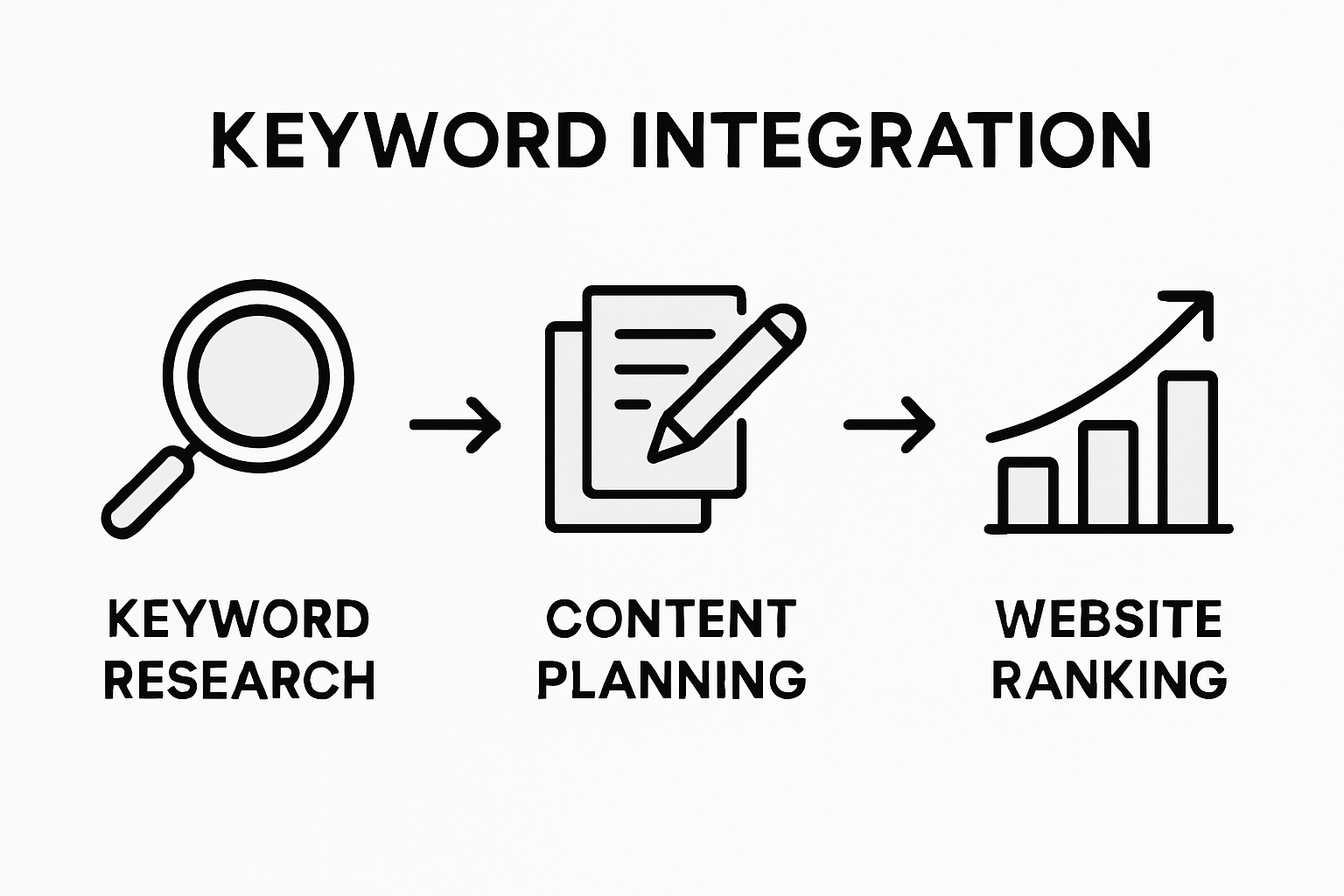
Successful keyword integration in content strategy requires a holistic approach that balances technical optimization with genuine value creation. Modern content strategies must move beyond keyword stuffing, instead focusing on creating meaningful, contextually rich content that naturally incorporates strategic terms. This means developing content ecosystems where keywords serve as organic connectors between user queries and substantive information, ultimately building trust, authority, and engagement through consistently relevant, high-quality content that genuinely serves audience needs.
Common Keyword Mistakes to Avoid
Keyword strategy is a nuanced discipline where seemingly minor errors can significantly undermine search performance. Why keyword research matters begins with understanding the most common pitfalls that can derail even well-intentioned SEO efforts. Recognizing and proactively addressing these mistakes represents the first critical step toward developing a robust, effective keyword approach.
Keyword selection mistakes frequently emerge from fundamental misunderstandings about search dynamics. One prevalent error involves obsessive focus on high-volume, generic keywords that generate massive competition. Marketers often chase broad terms without considering user intent or conversion potential, resulting in inefficient content strategies. For instance, targeting the keyword “shoes” might generate traffic, but targeting “affordable running shoes for flat feet” connects with a more specific, motivated audience more likely to convert. Another critical mistake involves keyword stuffing – artificially cramming content with repetitive terms that compromise readability and trigger search engine penalties.
The most sophisticated keyword strategies prioritize user experience over algorithmic manipulation. This means developing content that genuinely addresses audience needs, utilizing keywords as strategic connectors rather than mechanical insertion points. Successful practitioners understand that context, relevance, and authenticity matter far more than raw keyword density. Avoiding common mistakes requires a holistic approach that balances technical optimization with genuine value creation, ensuring that every piece of content serves both search engine requirements and human reader expectations.
Master Keywords to Unlock SEO Success
Struggling to connect your website with the right audience? This article highlights how strategic keyword use is essential to align your content with user intent and boost organic traffic. If you find yourself overwhelmed by broad keywords or unsure how to integrate search terms naturally, you are not alone. The solution lies in a thoughtful keyword strategy that balances relevance, search intent, and content depth.
Discover practical ways to elevate your content through our Copywriting – WordsAtScale resources that guide you beyond keyword stuffing into authentic communication. Explore powerful support tools designed to refine your SEO approach on our Tools – WordsAtScale page. Ready to transform your SEO results? Join our free 7-day advanced keyword research academy and gain exclusive access to expert strategies that can dramatically improve your search engine rankings.

Take action now by visiting WordsAtScale and secure your spot in the academy. Do not let ineffective keyword choices hold you back when the path to organic traffic and real online growth is just one click away.
Frequently Asked Questions
What are keywords in SEO?
Keywords are strategic terms and phrases that connect user search queries with relevant web content. They help search engines understand the context and relevance of web pages.
Why is keyword research important?
Keyword research reveals precise user language and intentions, allowing content creators to align their material with specific audience search behaviors, which enhances visibility and engagement.
How do keywords drive organic traffic?
Keywords function as navigational tools that connect potential audiences with relevant content. When integrated effectively in high-quality content, they help improve search rankings and attract targeted traffic.
What are some common keyword mistakes to avoid in SEO?
Common mistakes include obsessively focusing on high-volume, generic keywords and engaging in keyword stuffing. Instead, it’s essential to prioritize user intent and create meaningful content that genuinely addresses audience needs.
Recommended
- Keyword Research Explained: Key Benefits for SEO – WordsAtScale
- Why Keyword Research Matters: Complete Guide – WordsAtScale
- Complete Guide to the Role of Keywords in SEO – WordsAtScale
- What Is Keyword Research? Complete SEO Breakdown – WordsAtScale
- Business Social Media Strategy – Appture Digital ~ 855 Get Bizz