Most website owners believe that an SEO audit is a one-off fix, but in truth, regular audits drive ongoing improvements. Search engines update their algorithms thousands of times each year, forcing sites to adapt or risk falling behind. A thorough SEO audit uncovers hidden problems and highlights real opportunities for growth, so learning how these powerful assessments work can help you stay visible and competitive in a crowded online space.
Table of Contents
- Defining SEO Audits And Common Myths
- Types Of SEO Audits And Key Differences
- Core Components Of A Successful SEO Audit
- Step-By-Step SEO Audit Process Explained
- Critical Metrics And Tools For Effective Auditing
- Common SEO Audit Mistakes To Avoid
Key Takeaways
| Point | Details |
|---|---|
| SEO Audits are Ongoing | They are continuous assessments vital for adapting to evolving search algorithms, not just a one-time checkup. |
| Types of SEO Audits | Different audits like Technical, Content, and Competitive are needed to address specific aspects of a website’s performance. |
| Core Components | Successful audits consider On-Page, Off-Page, and Technical SEO, each contributing to enhanced visibility in search results. |
| Common Mistakes | Avoid neglecting content quality and technical elements, and remember SEO is a continuous process that demands regular updates. |
Defining SEO Audits and Common Myths
An SEO audit is a comprehensive evaluation of a website’s search engine optimization performance, examining factors that impact visibility and ranking in search results. Unlike common misconceptions, SEO audits are not one-time technical checkups but ongoing strategic assessments that help websites adapt to constantly changing search algorithms.
According to Stackmatix, SEO is not a static process but requires continuous optimization. This means regular audits are critical for sustained digital success. Key aspects of an SEO audit typically include:
- Analyzing website structure and technical performance
- Evaluating content relevance and quality
- Assessing keyword strategy and implementation
- Reviewing backlink profile and domain authority
- Checking mobile responsiveness and page loading speed
Many professionals mistakenly believe SEO is solely a technical endeavor. Letu highlights that effective SEO goes beyond technical manipulation and fundamentally centers on creating high-quality, relevant content that genuinely serves user needs. Search engines prioritize websites that provide authentic value, not just those with perfect technical configurations.
With What Is SEO Audit? Complete Guide for 2024, you can dive deeper into understanding how comprehensive audits transform your digital strategy from guesswork to precision-targeted optimization.
Types of SEO Audits and Key Differences
SEO audits are not a one-size-fits-all approach but rather a diverse set of strategic evaluations designed to address different aspects of a website’s digital performance. Understanding the primary types of SEO audits helps businesses develop targeted optimization strategies that address specific challenges and opportunities.
Technical SEO Audit
A technical SEO audit focuses on the backend infrastructure that enables search engines to crawl, understand, and index a website effectively. This type of audit examines critical elements such as:
- Website loading speed
- Mobile responsiveness
- Sitemap configuration
- Robots.txt file settings
- Broken links and redirects
- URL structure and canonicalization
- Schema markup implementation

Content SEO Audit
The content SEO audit evaluates the quality, relevance, and strategic alignment of a website’s written and multimedia content. Key focus areas include:
- Keyword optimization
- Content depth and comprehensiveness
- Internal linking strategy
- Content freshness and relevance
- Alignment with user search intent
- Readability and engagement metrics
Competitive SEO Audit
A competitive SEO audit involves analyzing your digital competitors’ strategies to identify gaps and opportunities in your own approach. This audit helps benchmark your performance against industry leaders and uncover potential strategic advantages.
When diving deeper into understanding SEO tools and their strategic implementation, our guide to SEO tools provides comprehensive insights into selecting and utilizing the right resources for your digital marketing efforts.
Core Components of a Successful SEO Audit
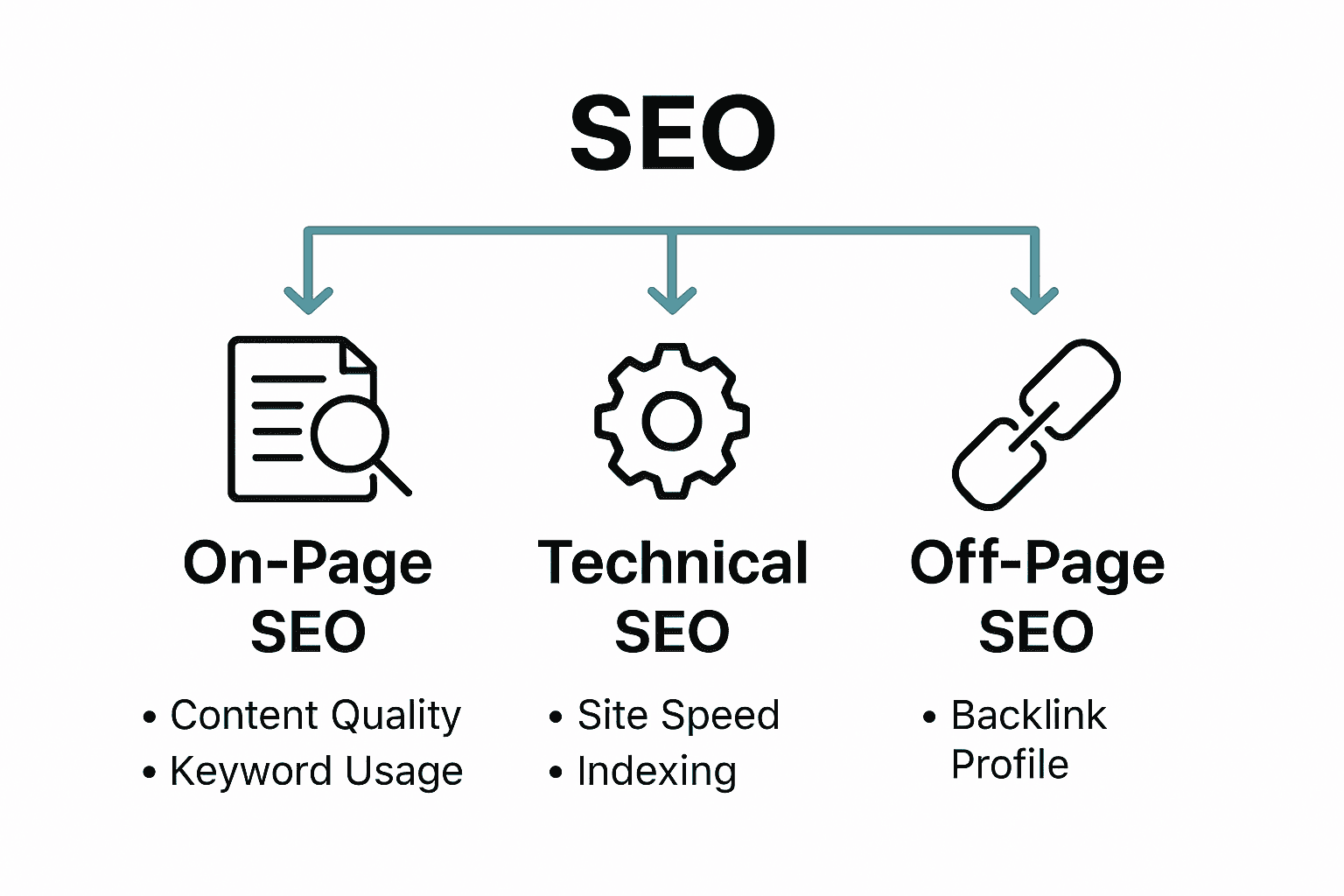
A comprehensive SEO audit is a multifaceted process that examines various critical dimensions of a website’s digital performance. According to IJFMR, successful SEO audits typically encompass three fundamental components: On-Page SEO, Off-Page SEO, and Technical SEO, each playing a unique role in enhancing search engine visibility.
On-Page SEO Analysis
On-Page SEO focuses on optimizing individual web pages to improve search rankings and attract targeted organic traffic. Key elements include:
- Content quality and relevance
- Strategic keyword integration
- Meta tag optimization
- Header tag hierarchy
- Internal linking structure
- Image alt text and multimedia optimization
Technical SEO Evaluation
Technical SEO addresses the backend infrastructure that enables search engines to effectively crawl, understand, and index a website. As ISJEM highlights, critical technical aspects include:
- Website loading speed
- Mobile device responsiveness
- Secure HTTPS configuration
- XML sitemap accuracy
- Structured data implementation
- Crawlability and indexing performance
Off-Page SEO Assessment
Off-Page SEO extends beyond the website itself, concentrating on building digital credibility and authority through external signals. This component involves:
- Quality backlink profile analysis
- Domain authority evaluation
- Brand mention tracking
- Social media engagement metrics
- Reputation management strategies
For a deeper understanding of technical optimization strategies, check out our technical SEO step-by-step guide that provides actionable insights for site improvement.
Step-by-Step SEO Audit Process Explained
Conducting a comprehensive SEO audit requires a systematic approach that methodically evaluates and improves a website’s search engine performance. According to IJARSCT, the SEO audit process is critical for identifying and resolving technical issues that can significantly impact search rankings.
Preliminary Website Analysis
The first stage of an SEO audit involves a comprehensive preliminary assessment:
- Crawlability Check
- Verify website indexing status
- Check robots.txt configuration
- Ensure proper XML sitemap submission
- Technical Performance Evaluation
- Measure website loading speed
- Assess mobile responsiveness
- Identify broken links and redirects
Detailed Content and Keyword Examination
Keyword and Content Analysis represents the next critical phase of the SEO audit. This involves:
- Reviewing current keyword strategy
- Analyzing content relevance and quality
- Identifying content gaps
- Evaluating internal linking structure
- Checking metadata optimization
Comprehensive Backlink and Authority Assessment
As IJNRD highlights, the backlink assessment is crucial for establishing website authority. This stage includes:
- Analyzing current backlink profile
- Identifying toxic or low-quality links
- Evaluating domain authority
- Checking competitor backlink strategies
- Planning strategic link-building opportunities
For those new to SEO strategy, our SEO for Beginners guide provides an excellent starting point for understanding these complex processes.
Critical Metrics and Tools for Effective Auditing
Successful SEO auditing hinges on tracking and analyzing the right metrics using sophisticated digital tools. Performance metrics provide critical insights into a website’s search engine optimization effectiveness, revealing opportunities for strategic improvement and potential growth areas.
Key Performance Metrics
Effective SEO auditing requires monitoring several crucial performance indicators:
Organic Search Metrics:
- Search engine rankings
- Organic traffic volume
- Click-through rates (CTR)
- Bounce rates
- Average session duration
Technical Performance Indicators:
- Page loading speed
- Mobile responsiveness
- Crawl errors
- Indexation rate
- Core Web Vitals score
Essential SEO Auditing Tools
Professional SEO auditing demands a comprehensive toolkit that provides deep analytical capabilities:
Free Tools:
- Google Search Console
- Google Analytics
- Google PageSpeed Insights
- Bing Webmaster Tools
Advanced Paid Tools:
- SEMrush
- Ahrefs
- Moz Pro
- Screaming Frog
To gain deeper insights into digital analytics and performance tracking, explore our free blog analytics tools comparison for comprehensive recommendations tailored to various skill levels and budgets.
Common SEO Audit Mistakes to Avoid
SEO audits are complex processes where even experienced professionals can inadvertently stumble. According to Letu, one of the most pervasive misconceptions is that SEO requires extensive technical expertise, when in reality, creating high-quality and relevant content remains paramount.
Overlooking Content Quality
Content-Related Mistakes:
- Keyword stuffing
- Neglecting user intent
- Producing shallow, generic content
- Ignoring content freshness
- Failing to address user questions comprehensively
Technical Optimization Errors
Common technical SEO audit mistakes include:
- Incomplete website crawlability
- Ignoring mobile responsiveness
- Overlooking page loading speed
- Ineffective internal linking
- Neglecting metadata optimization
Strategic Misconceptions
As Stackmatix emphasizes, treating SEO as a one-time task is a critical error. SEO is an ongoing process requiring continuous optimization and adaptation to evolving search algorithms.
To develop a more nuanced understanding of digital marketing strategies, explore our guide on why SEO matters for comprehensive insights into effective search engine optimization.
Take Control of Your SEO Audit Journey Today
Understanding the complexities of an SEO audit can be overwhelming, especially when every factor from technical performance to content quality plays a crucial role in your search engine success. If you are struggling with pinpointing crawlability issues, assessing backlink authority, or aligning your content with user intent, you are not alone. Mastering these challenges is essential because SEO is an ongoing process that demands precision and continuous improvement.

Unlock the full potential of your website with expert guidance and powerful tools at wordsatscale.com. Our free 7-day advanced keyword research academy and comprehensive resources are designed to help you stay ahead in the evolving SEO landscape. Don’t wait for your competitors to surpass you. Start refining your SEO audits now and see measurable results by joining our community of marketers and bloggers who are transforming their digital strategies. Explore practical insights and proven tactics in our SEO for Beginners guide and dive deeper into technical SEO strategies to build a stronger, more visible online presence.
Frequently Asked Questions
What is an SEO audit?
An SEO audit is a comprehensive evaluation of a website’s search engine optimization performance, examining factors that impact visibility and ranking in search results. It is an ongoing process rather than a one-time checkup.
Why are SEO audits important for my website?
SEO audits are essential because they help identify technical issues, assess content quality, and evaluate keyword strategies, ultimately ensuring your website adapts to changing search algorithms and maintains optimal performance.
What are the main types of SEO audits?
The main types of SEO audits include technical SEO audits, content SEO audits, and competitive SEO audits, each focusing on different aspects of a website’s digital performance to inform targeted optimization strategies.
What metrics should I track during an SEO audit?
Key performance metrics to track during an SEO audit include organic search rankings, organic traffic volume, click-through rates, page loading speed, and mobile responsiveness, which together provide insights into your website’s effectiveness in search engine optimization.