Most american marketers still believe that only keywords matter in SEO, yet research shows that over 60 percent of top-ranking pages now rely on semantic relationships and context. This shift is changing how websites are ranked in search results, as search engines grow smarter at understanding the true intent behind a query. Learning how semantic SEO actually works—and separating fact from fiction—can help you create content that stands out, no matter the size of your website.
Table of Contents
- Defining Semantic SEO And Common Myths
- How Search Engines Use Semantic Analysis
- Key Elements Of Semantic SEO Strategies
- Implementing Entity Optimization Effectively
- Benefits And Pitfalls Of Semantic SEO Approaches
Key Takeaways
| Point | Details |
|---|---|
| Understanding Semantic SEO | Semantic SEO focuses on comprehending user intent and relationships between topics rather than solely matching keywords. |
| Importance of Content Strategy | Effective implementation involves creating comprehensive, topic-clustered content that addresses multiple related concepts. |
| Benefits and Challenges | While semantic SEO improves search relevance and traffic potential, it requires continuous adaptation to search algorithms and ongoing investment. |
| Role of Entity Optimization | Entity optimization helps in structuring content to illustrate complex relationships, enhancing search engine comprehension and user experience. |
Defining Semantic SEO and Common Myths
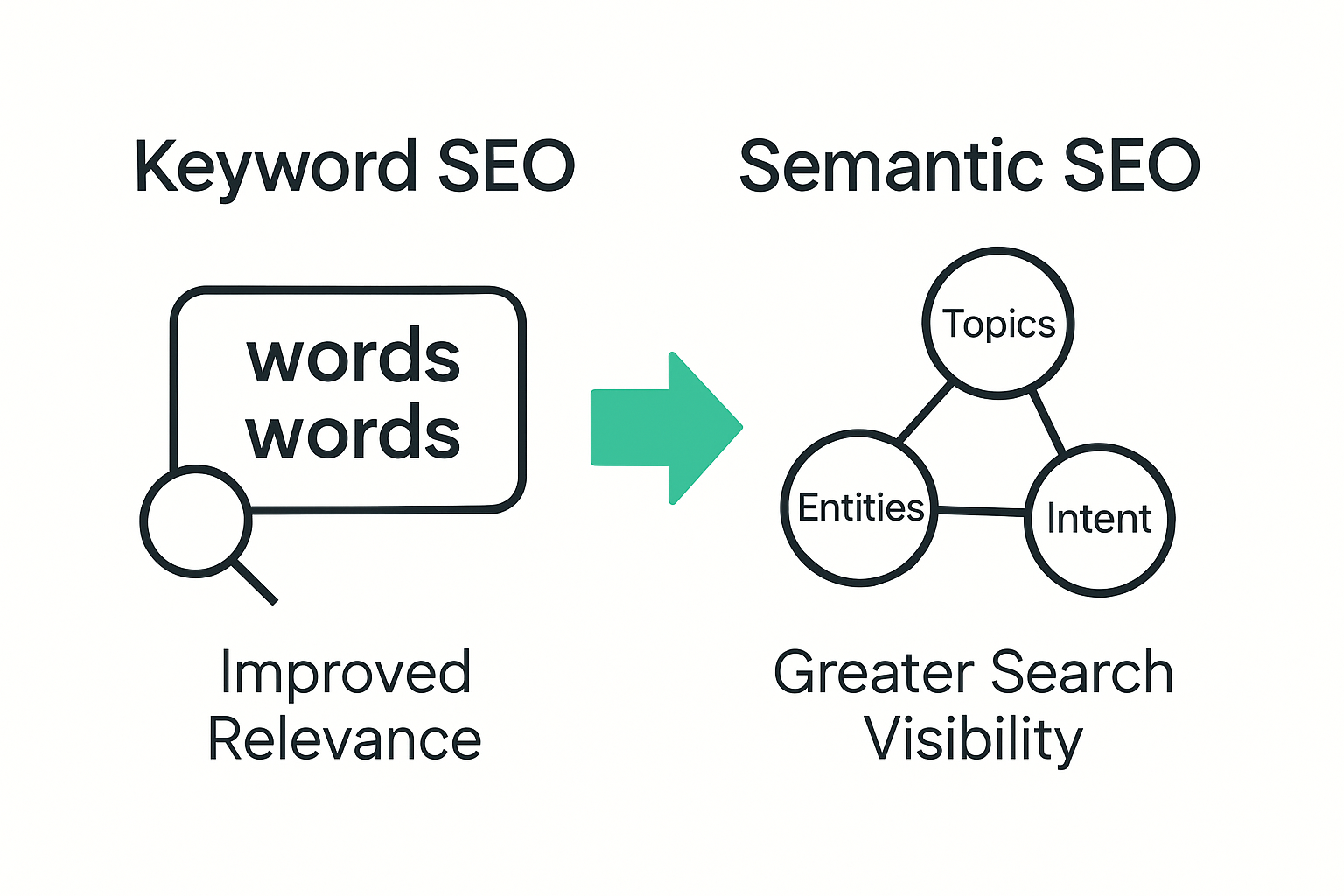
Semantic SEO represents a sophisticated approach to search engine optimization that goes far beyond traditional keyword matching. According to Coursera, semantic search focuses on understanding the contextual meaning and intent behind a user’s search query, instead of simply matching individual keywords.
At its core, semantic SEO is about comprehending the deeper meaning and relationships between search terms, concepts, and user intent. Google Cloud emphasizes that this approach interprets search queries holistically, delivering more nuanced and relevant results that align with what users genuinely seek.
Some persistent myths about semantic SEO often mislead digital marketers and content creators. Common misconceptions include:
- Semantic SEO completely replaces keyword research
- Context and intent are more important than specific keywords
- Only large websites can implement semantic SEO strategies
In reality, semantic SEO enhances rather than replaces traditional SEO practices. It requires a strategic blend of contextual understanding, sophisticated keyword usage, and high-quality content that addresses user needs comprehensively. Successful implementation means creating content that speaks directly to user intent while maintaining strong keyword relevance.
The goal is not to trick search engines, but to provide genuinely useful information that matches what searchers are truly seeking. By understanding user intent, mapping content to comprehensive topical clusters, and creating deeply researched material, websites can dramatically improve their semantic search performance.

How Search Engines Use Semantic Analysis
Search engines have dramatically evolved from simple keyword matching to sophisticated semantic analysis techniques that comprehend the deeper meaning behind search queries. According to research from MECS Press, modern search technologies now integrate advanced semantic technologies like Resource Description Framework (RDF) and Web Ontology Language (OWL) to process queries with unprecedented contextual understanding.
The core mechanism of semantic analysis involves breaking down search queries into meaningful components that reveal user intent beyond literal word matches. Semantic technologies enable search engines to recognize relationships between concepts, understand contextual nuances, and deliver more precise search results. ArXiv highlights how machine learning models like BERT embeddings have revolutionized this process by creating sophisticated semantic interpretation frameworks.
Key strategies search engines use for semantic analysis include:
- Natural language processing (NLP)
- Machine learning algorithms
- Knowledge graph integration
- Contextual query understanding
- Intent mapping and prediction
The ultimate goal of semantic analysis is transforming raw search queries into intelligent, context-aware information retrieval. By understanding not just what words are used, but what meaning those words communicate, search engines can provide dramatically more relevant results.
To enhance semantic search capabilities, content creators should focus on developing comprehensive, topic-clustered content that addresses multiple related concepts. This approach helps search engines recognize the depth and breadth of topical expertise, signaling high-quality, contextually rich information that genuinely serves user needs.
Key Elements of Semantic SEO Strategies
Semantic SEO strategies represent a sophisticated approach to content optimization that goes far beyond traditional keyword targeting. Coursera highlights critical components that transform how websites develop and structure their digital content, focusing on creating meaningful connections between topics and user intent.
Topic clustering emerges as a fundamental strategy in semantic SEO, where content is organized around comprehensive subject themes rather than isolated keywords. This approach involves creating interconnected content pieces that comprehensively address multiple aspects of a specific subject, signaling topical authority to search engines. When implementing topic clusters, content creators must develop a network of related articles that explore different angles and depths of a core topic.
Key elements of effective semantic SEO strategies include:
- Implementing structured data markup
- Developing comprehensive topic clusters
- Understanding and targeting user intent
- Creating in-depth, contextually rich content
- Utilizing natural language processing techniques
Successful semantic SEO requires a holistic content strategy that anticipates user questions and provides nuanced, comprehensive answers. By mapping out content relationships and developing materials that address multiple user needs, websites can dramatically improve their search engine visibility. How to Write SEO-Friendly Content for Top Rankings can provide additional insights into crafting content that resonates with both users and search algorithms.
The ultimate goal of semantic SEO is transforming content from keyword-stuffed pages to intelligent, contextually rich resources that genuinely serve user needs. Content creators must think beyond traditional optimization techniques, focusing instead on creating meaningful, interconnected information ecosystems that demonstrate deep topical expertise and authentic value to searchers.
Implementing Entity Optimization Effectively
Entity optimization represents a sophisticated approach to structuring digital content that enables search engines to understand complex relationships between concepts. According to research from MECS Press, advanced semantic technologies like Resource Description Framework (RDF) and Web Ontology Language (OWL) provide powerful tools for defining and interconnecting digital entities with unprecedented precision.
Entity optimization goes beyond traditional keyword mapping by creating comprehensive semantic networks that illustrate intricate connections between topics, people, places, and concepts. ArXiv highlights how machine learning models like BERT embeddings have revolutionized this process, enabling search engines to capture nuanced contextual relationships that traditional algorithms might miss.
Key strategies for effective entity optimization include:
- Implementing structured data markup
- Creating detailed entity descriptions
- Establishing clear relationships between entities
- Using consistent naming conventions
- Developing comprehensive knowledge graphs
- Maintaining high-quality, authoritative content
Successful entity optimization requires a holistic approach that treats each piece of content as an interconnected node within a larger information ecosystem. Content creators must think beyond individual keywords, focusing instead on building rich, semantically meaningful content that demonstrates deep topical expertise. SEO Content Creation Guide for Higher Rankings offers additional insights into developing content that resonates with both search algorithms and human readers.
The ultimate goal of entity optimization is transforming fragmented information into a cohesive, intelligently structured knowledge base. By meticulously defining and connecting entities, websites can signal profound subject matter expertise, ultimately improving search visibility and providing more meaningful user experiences.
Benefits and Pitfalls of Semantic SEO Approaches
Semantic SEO represents a sophisticated strategy that promises significant improvements in search engine performance, but it also comes with unique challenges. Coursera highlights that while semantic approaches can dramatically enhance search result relevance, they require complex implementation and continuous adaptation to evolving search algorithms.
Search visibility fundamentally transforms when organizations embrace semantic SEO principles. The core benefits include improved organic traffic, more accurate user intent matching, and deeper content comprehension by search engines. The Role of AI in SEO suggests that advanced technologies are making semantic optimization increasingly sophisticated and accessible.
Key benefits and potential pitfalls of semantic SEO include:
- Enhanced search result accuracy
- More nuanced user intent understanding
- Increased organic traffic potential
- Higher content relevance ranking
- Complex implementation requirements
- Continuous algorithm adaptation needs
Successful semantic SEO demands a strategic approach that balances technical optimization with high-quality, contextually rich content. Content creators must invest significant effort in developing comprehensive, interconnected resources that demonstrate deep topical expertise. This means moving beyond traditional keyword strategies and creating holistic information ecosystems that genuinely serve user needs.
Ultimately, semantic SEO is not a one-time implementation but an ongoing commitment to understanding and anticipating user search behaviors. While the approach requires substantial initial investment and continuous refinement, organizations that master semantic optimization can achieve unprecedented levels of search engine visibility and user engagement.
Unlock the Power of Semantic SEO with WordsAtScale
If you find semantic SEO challenging and feel overwhelmed by concepts like entity optimization and topic clustering you are not alone. Many marketers struggle to move beyond traditional keyword strategies while trying to embrace the deeper understanding of user intent and context that semantic SEO demands. With the complexities of natural language processing and structured data markup becoming essential to success it is crucial to equip yourself with the right skills and tools to stand out.
At WordsAtScale you can discover proven strategies to create contextually rich and user-focused content that search engines will love. Our Copywriting – WordsAtScale resources and expert guidance help you master crafting comprehensive, topical clusters that boost authority and visibility. Join our platform now, explore actionable tips, and start transforming your SEO approach into a powerhouse of relevance and engagement.

Take control of your semantic SEO journey today by visiting WordsAtScale. Learn how to create meaningful connections within your content that truly meet user intent and watch your search rankings improve. The sooner you start the smarter your SEO investment becomes. Don’t wait to unlock your website’s full potential.
Frequently Asked Questions
What is Semantic SEO?
Semantic SEO is an advanced approach to search engine optimization that focuses on understanding the contextual meaning and intent behind a user’s search query, rather than just matching individual keywords.
How do search engines use semantic analysis?
Search engines utilize semantic analysis by breaking down search queries into meaningful components to uncover user intent and relationships between concepts, which leads to more precise and relevant search results.
What are the key elements of effective semantic SEO strategies?
Key elements include implementing structured data markup, developing comprehensive topic clusters, targeting user intent, creating in-depth content, and utilizing natural language processing techniques.
What are the benefits of semantic SEO?
Benefits include enhanced search result accuracy, improved organic traffic potential, a better understanding of user intent, and increased content relevance ranking, though it requires complex implementation and continuous adaptation.
Recommended
- Why SEO Matters: Complete Guide for Digital Success – WordsAtScale
- SEO Audit Guide: Everything You Need to Know – WordsAtScale
- Blog – WordsAtScale
- What Is Voice Search SEO? Complete Overview – WordsAtScale
- Was ist Semantic SEO? Ein Leitfaden für Marketingprofis – Onlinemarketing360
- Understanding the Future of SEO 2025 – seo analytic